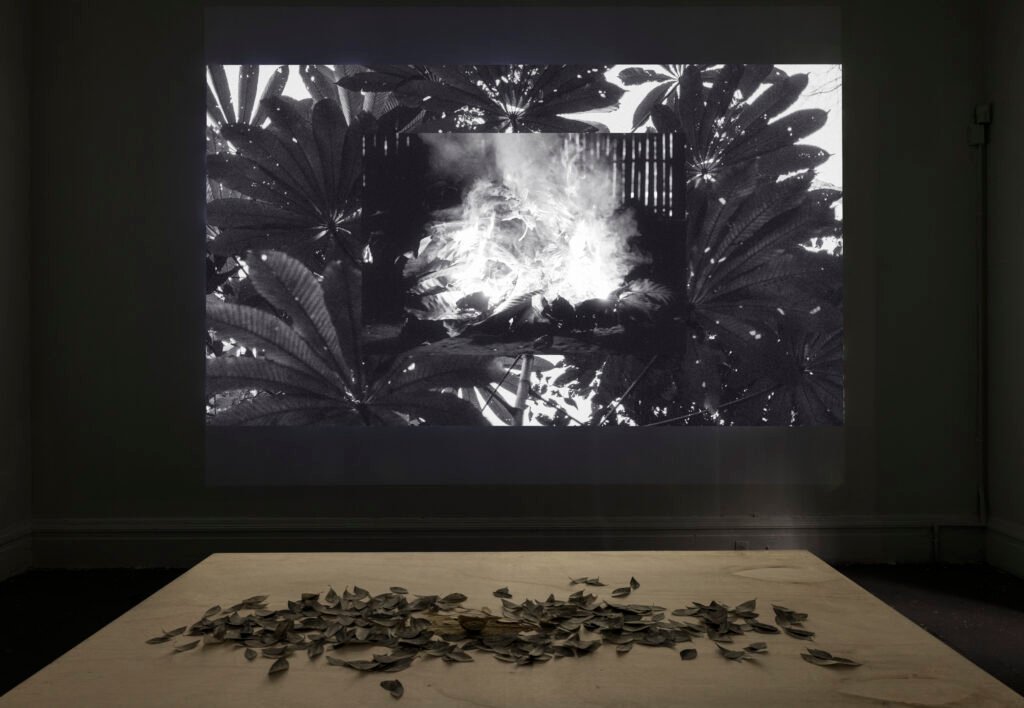
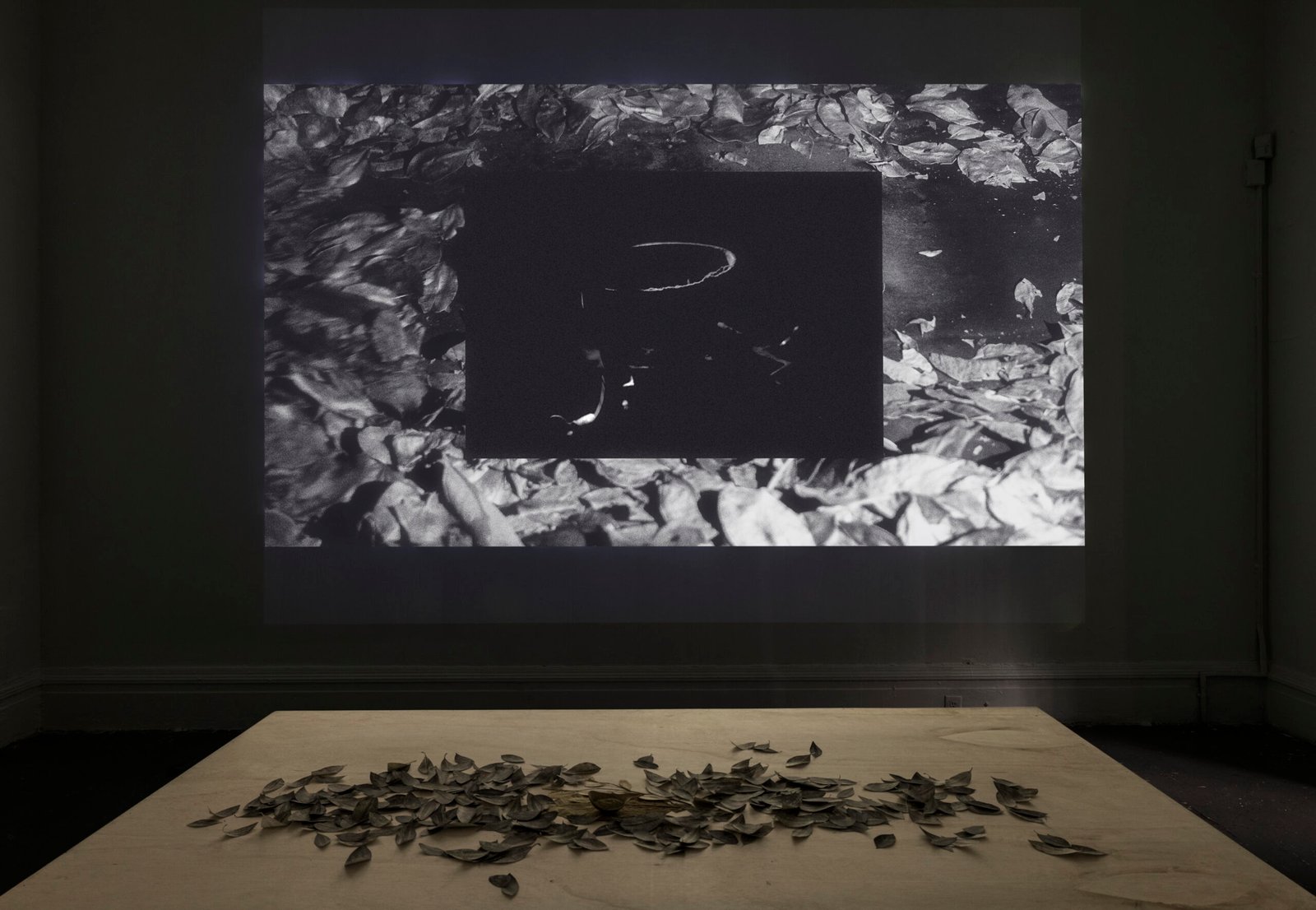
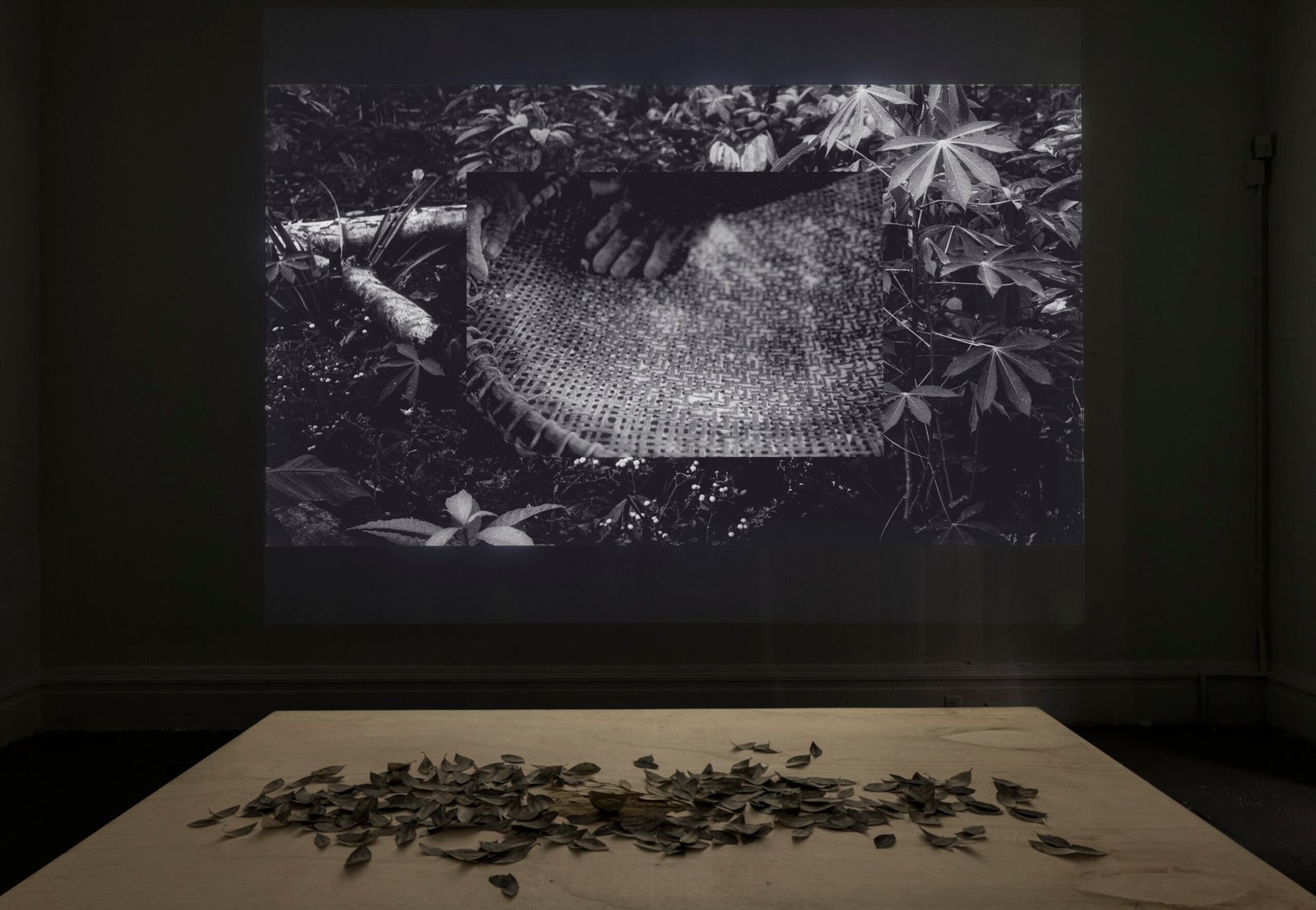
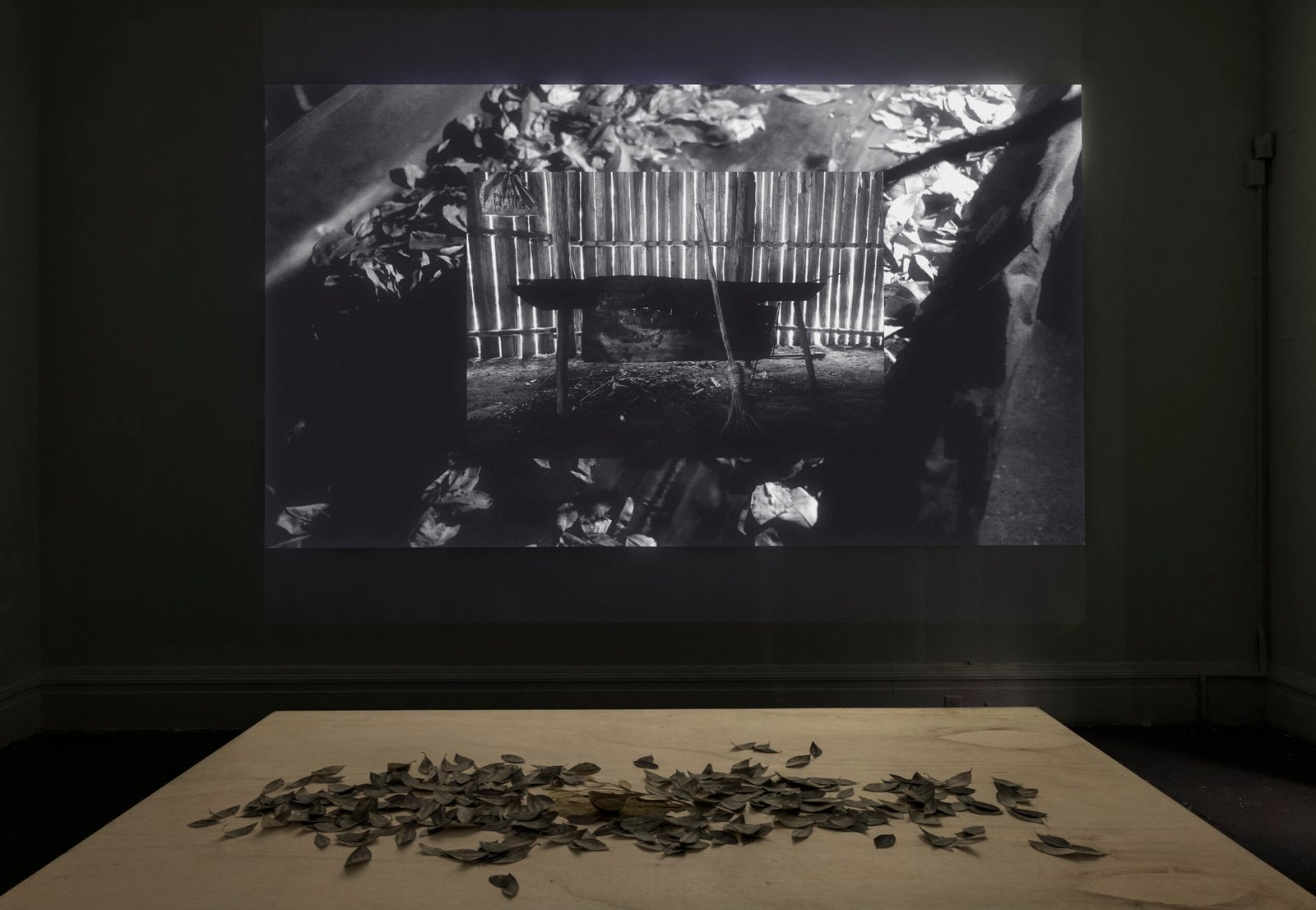
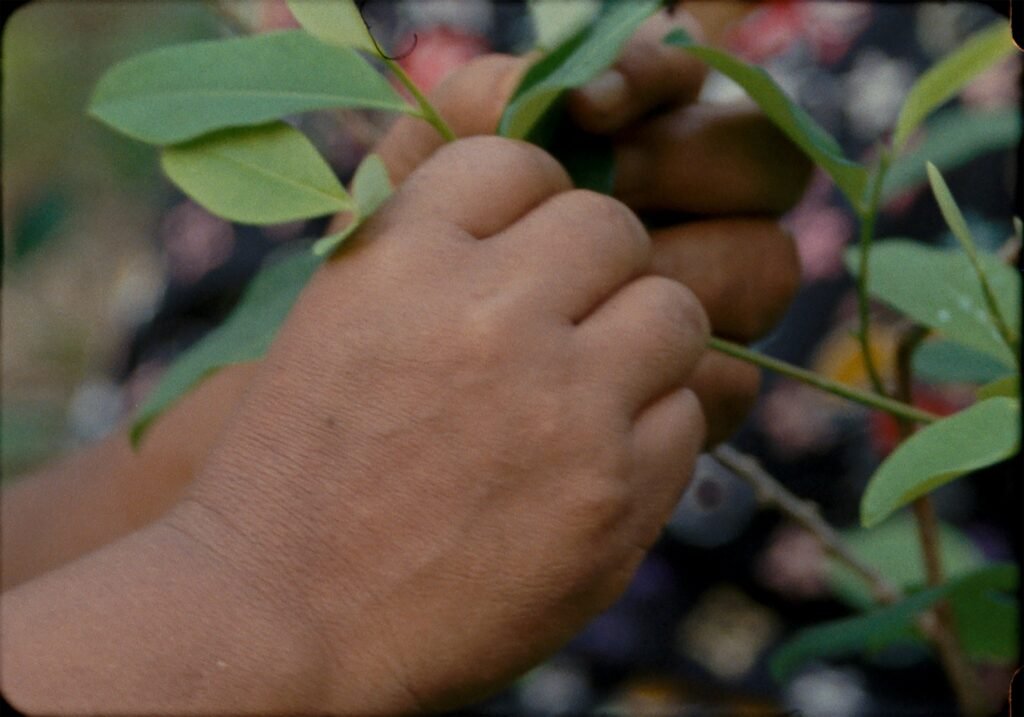
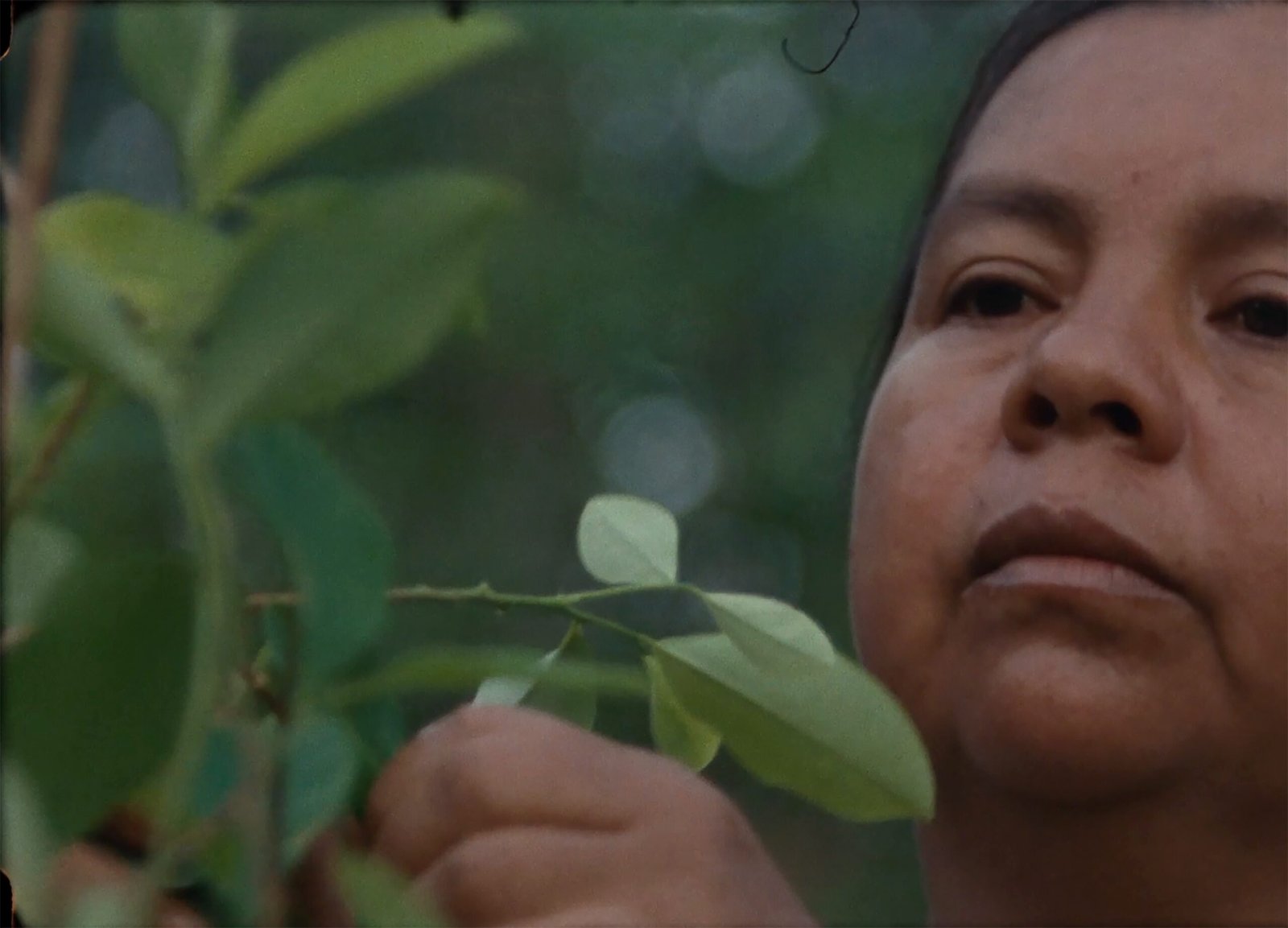
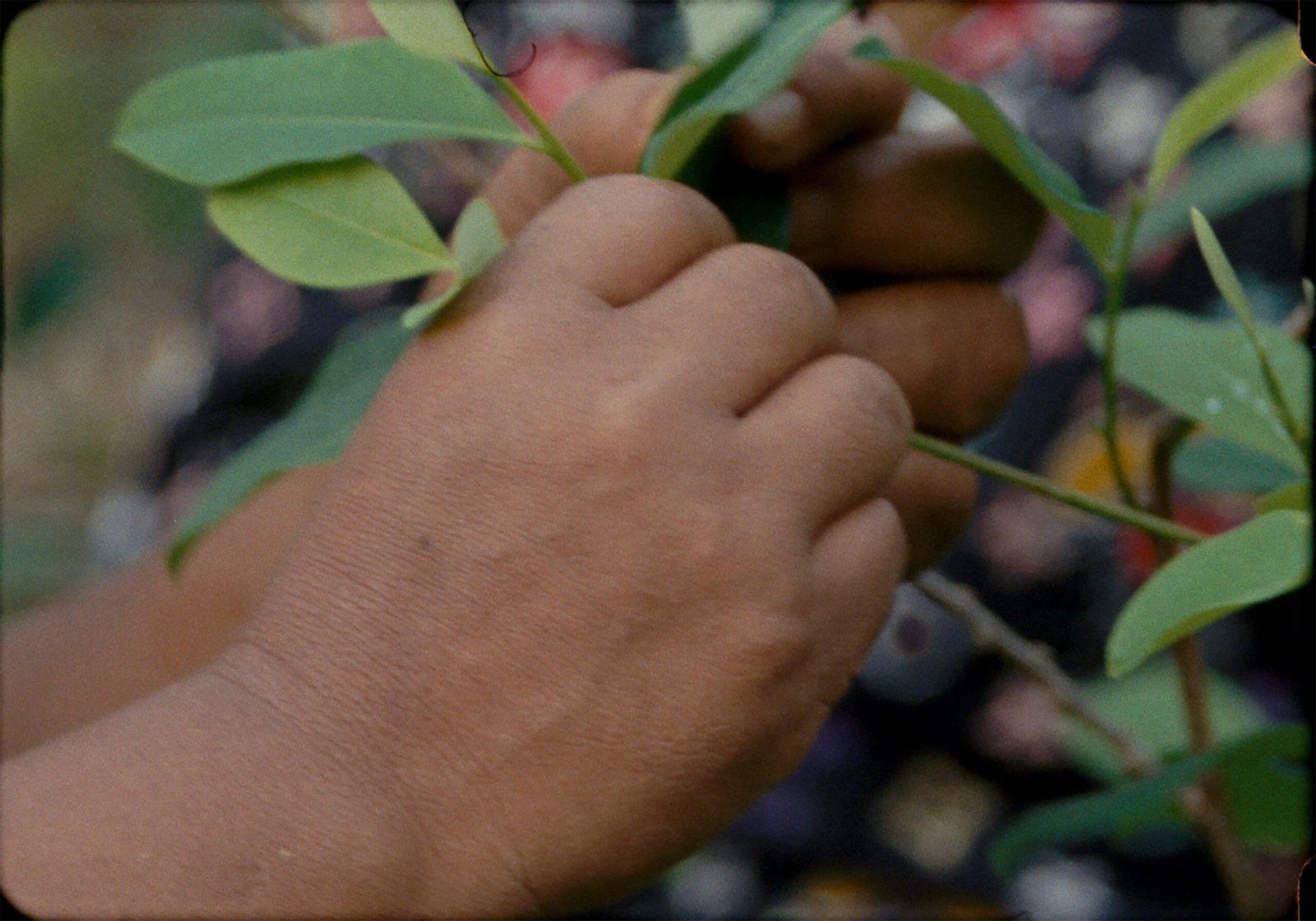
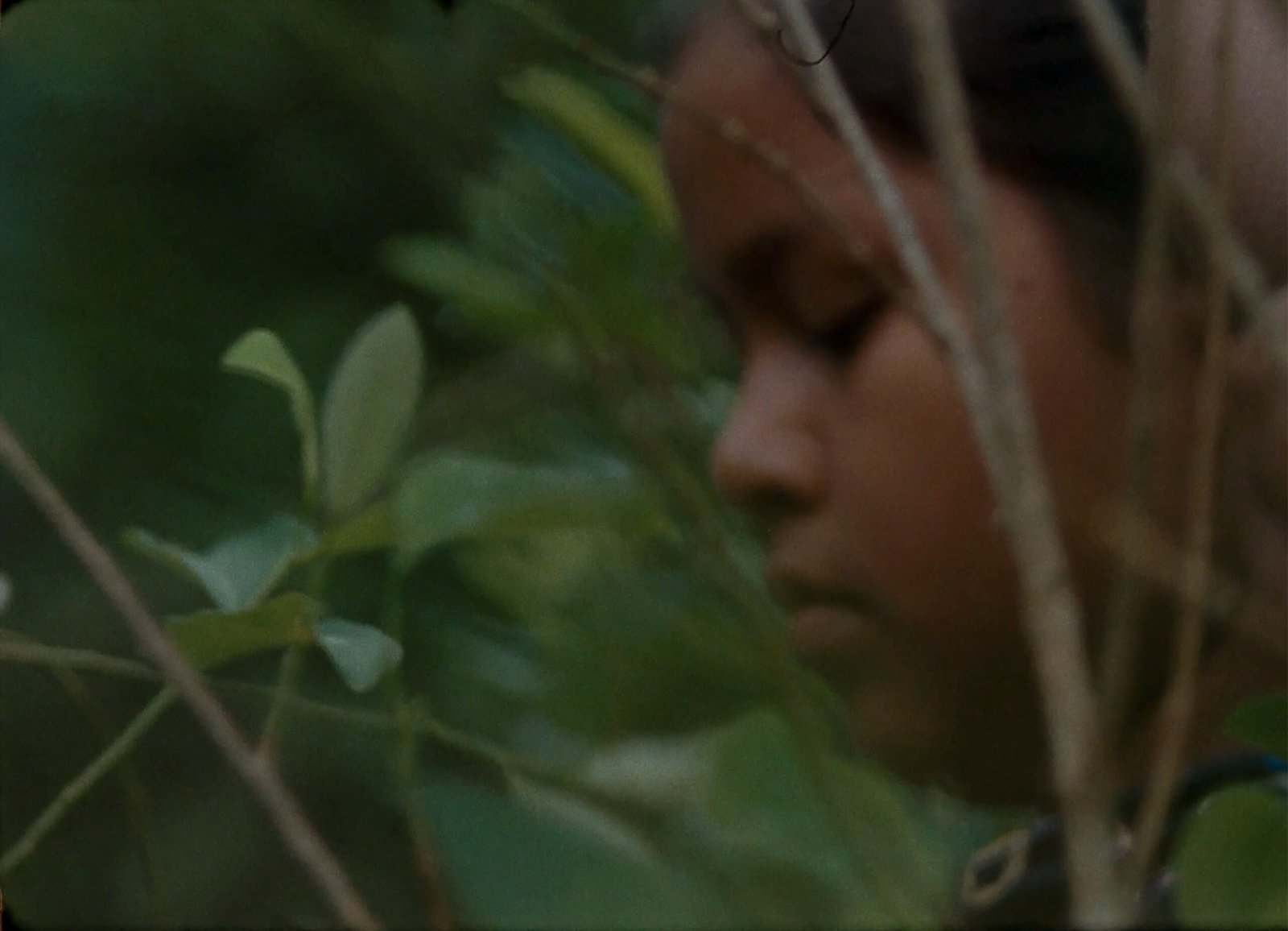
Sabio yarumo, dulce coca, tabaco frío y yuca brava

Sabio yarumo, dulce coca, tabaco frío y yuca brava

Tatiana Arocha

Artist’s country of origen: Colombia – United States
Medium: Single channel video with audio
Year: 2025
Photo Credit: Etienne Frossard © Tatiana Arocha

Line of Inquiry:

Coca-Worlds

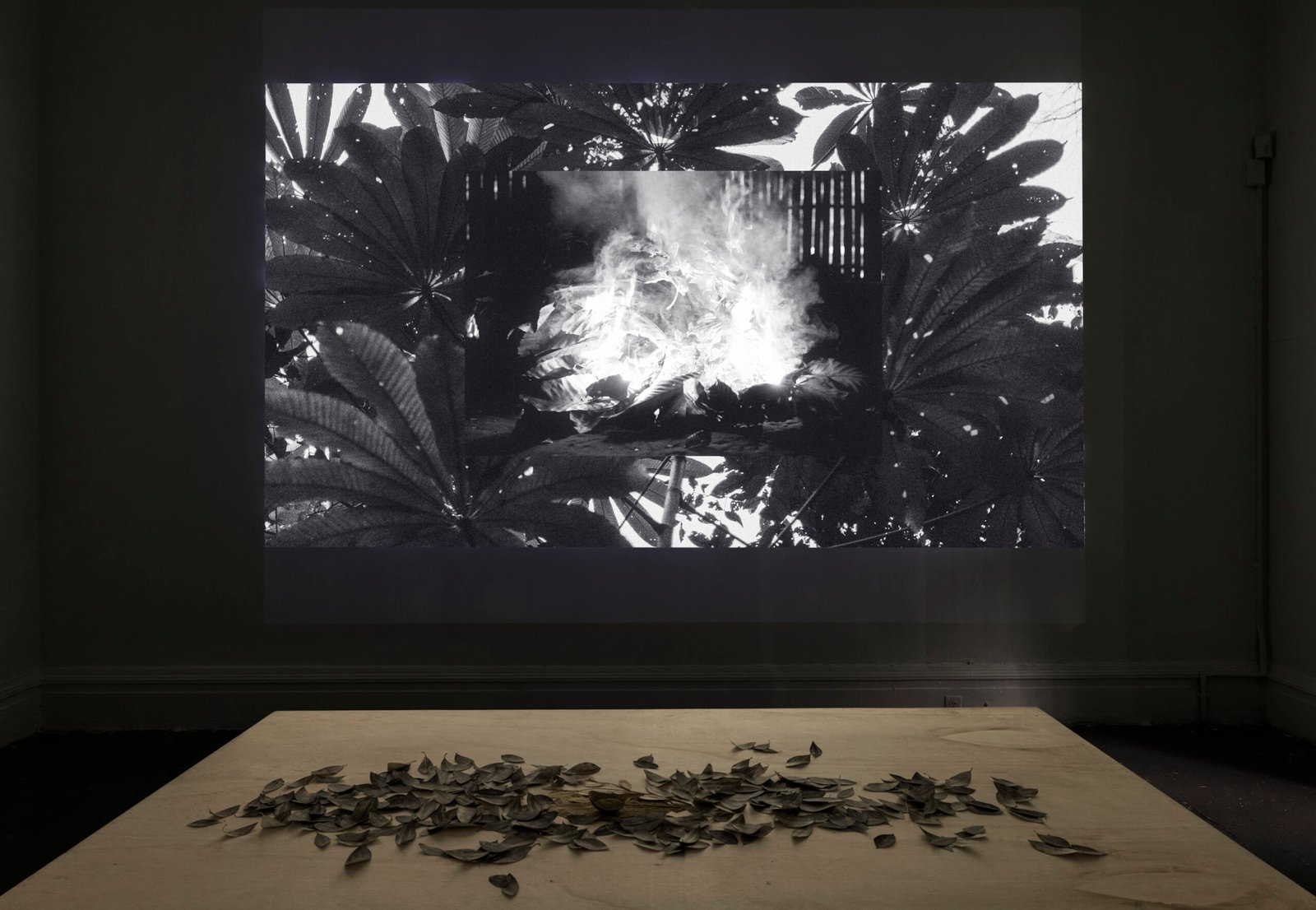
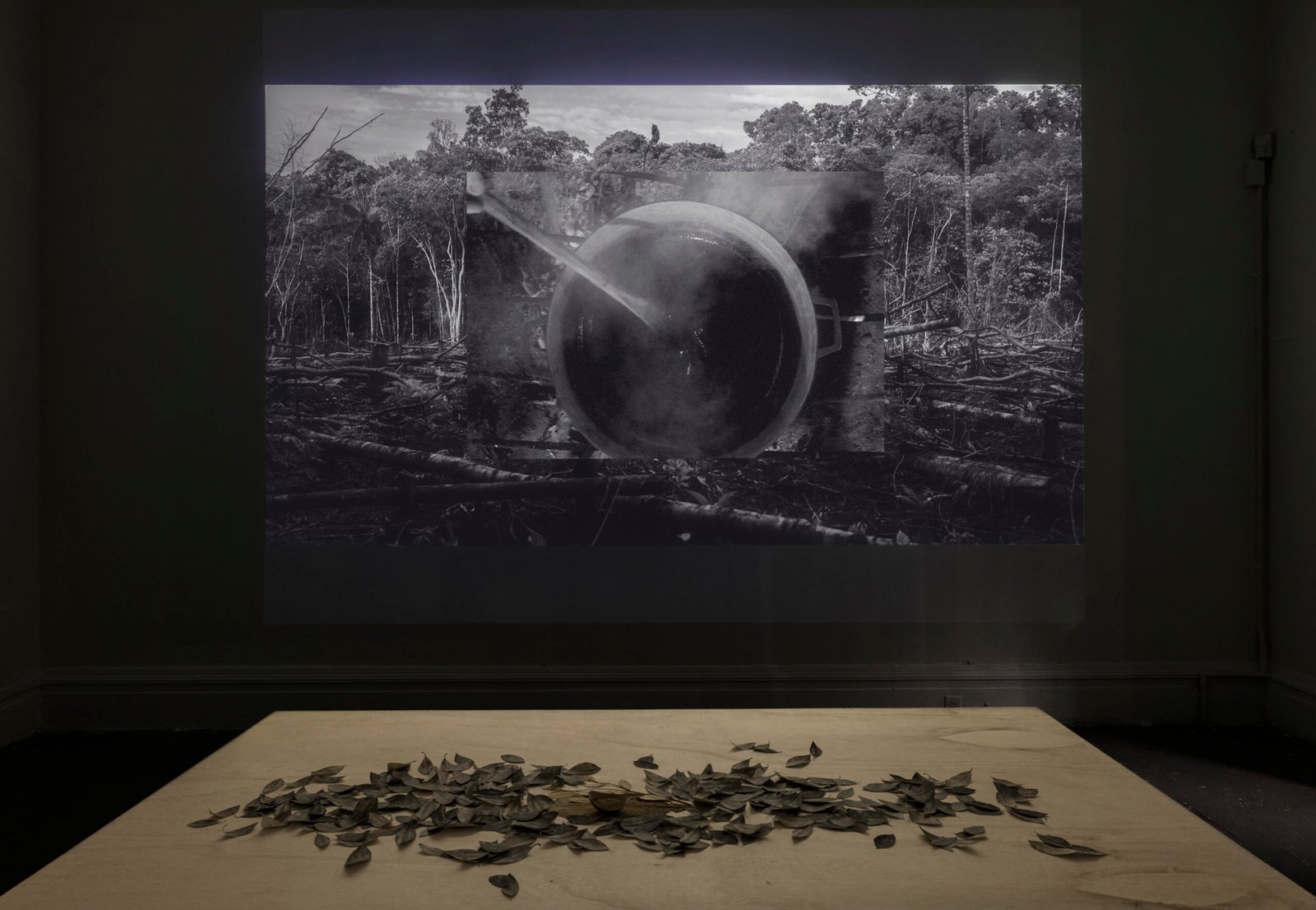
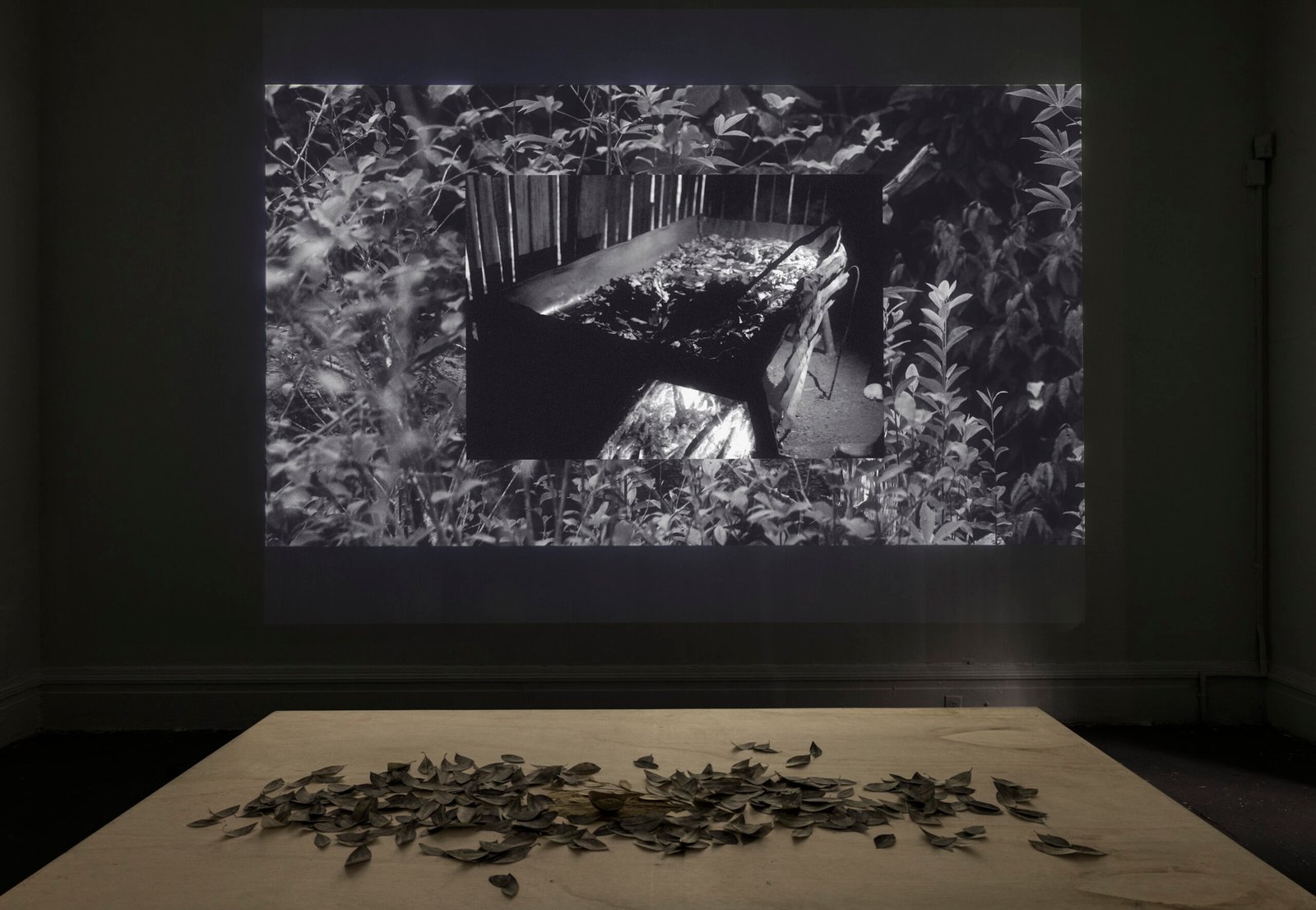
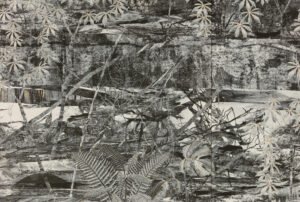
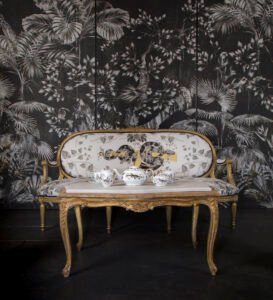
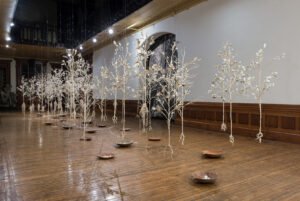
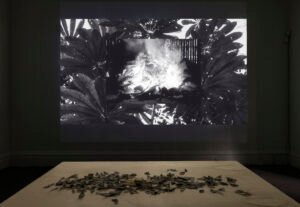
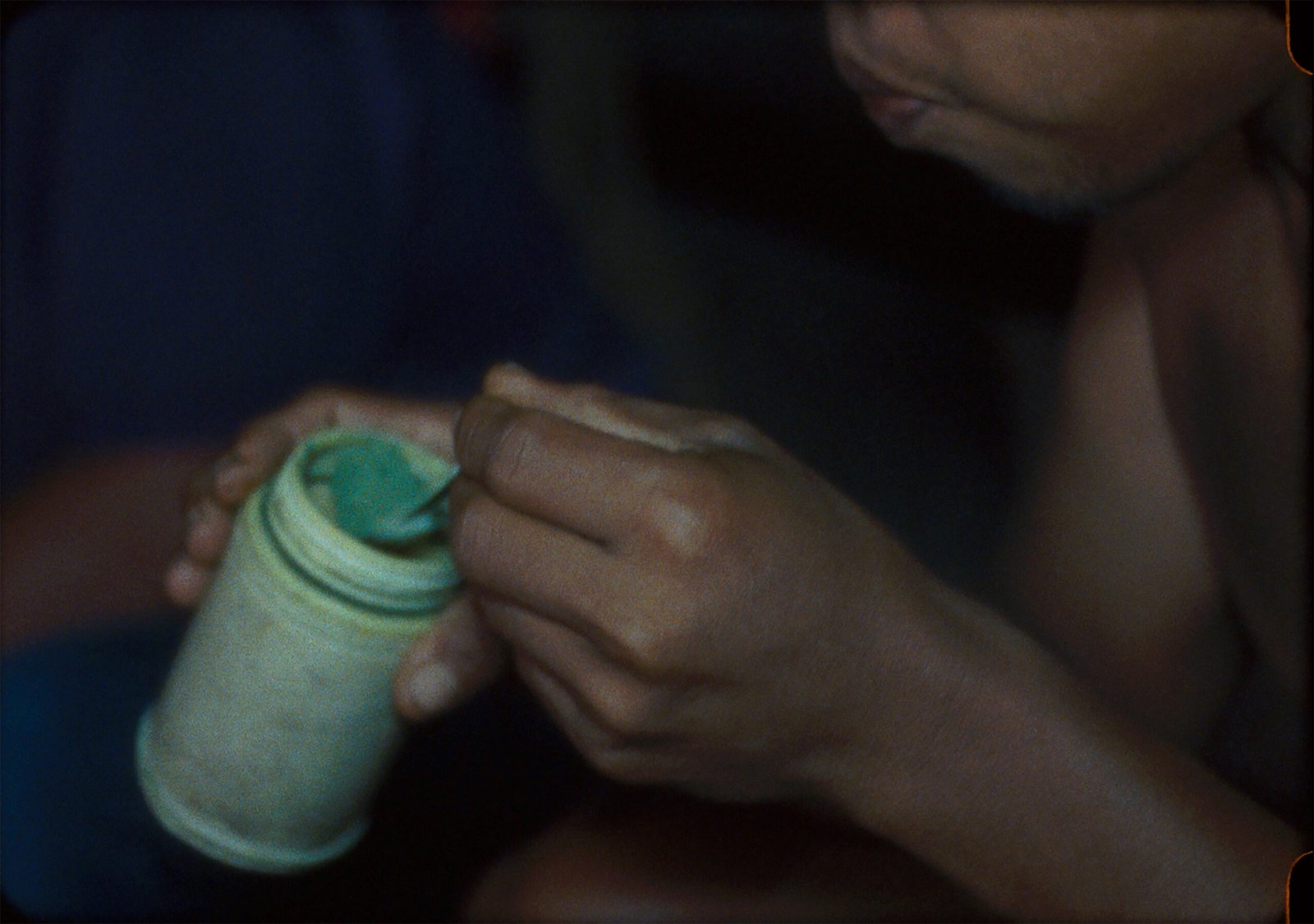
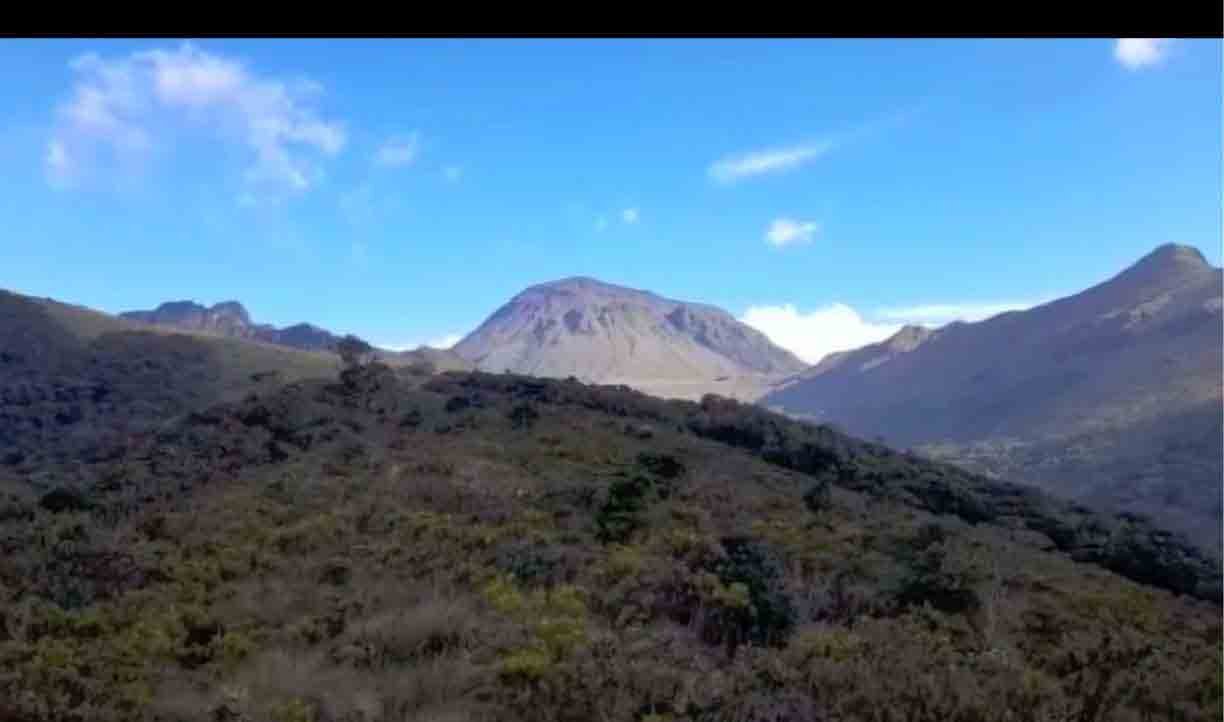
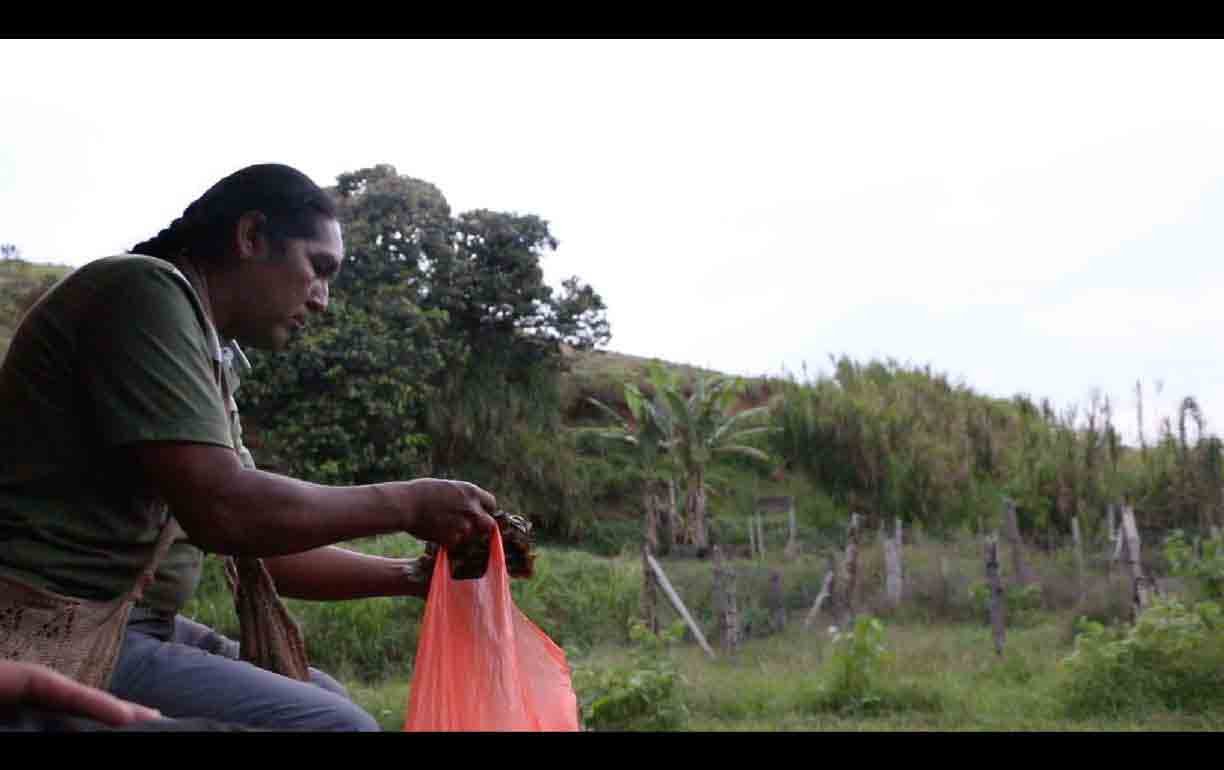
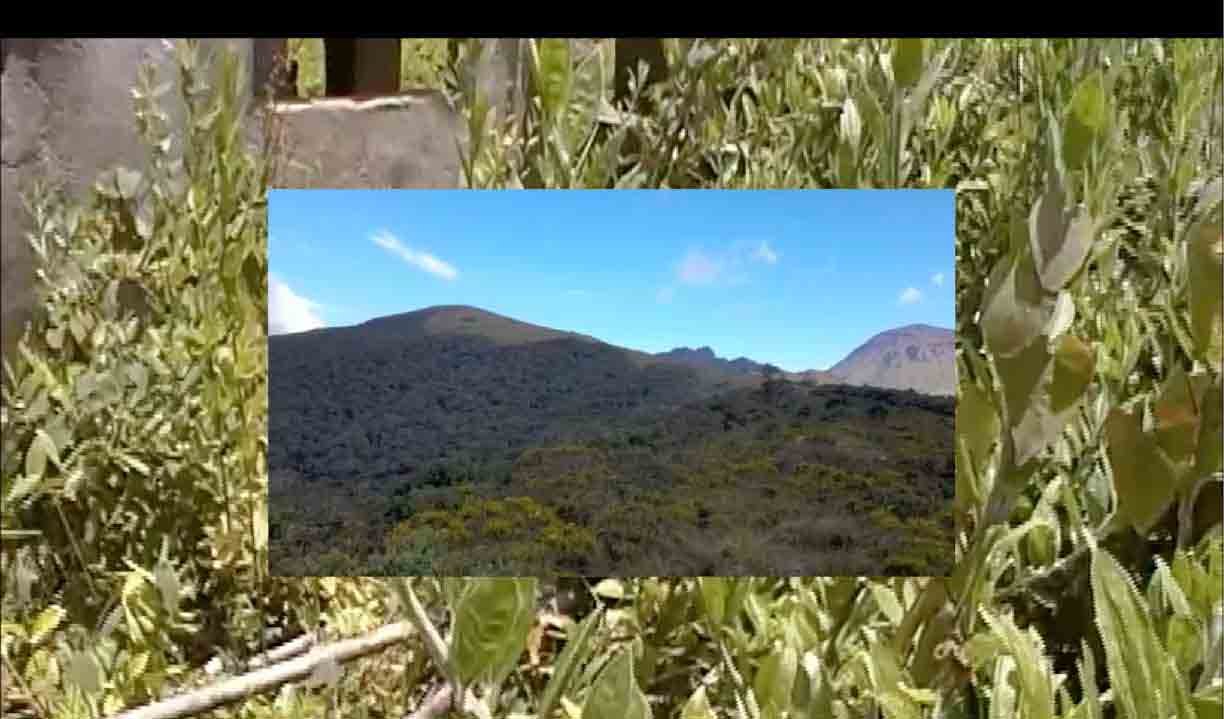
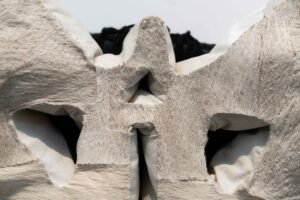
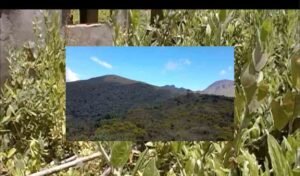
Sabio Yarumo, Dulce Coca, Tabaco Frío y Yuca Brava is an immersive audiovisual installation in which the four elements that give it its title — yarumo, coca, tobacco, and yuca — are living forces in constant dialogue at the center of the maloca, where the domestic and the sacred intertwine.

In the maloca of the Bora Muinane reserve, everything happens simultaneously: the preparation of mambe, the roasting of the leaves, and the voices of the community intertwine like layers of a single sonic fabric, creating a living archive and inviting an act of deep listening.

The Artist

Tatiana Arocha

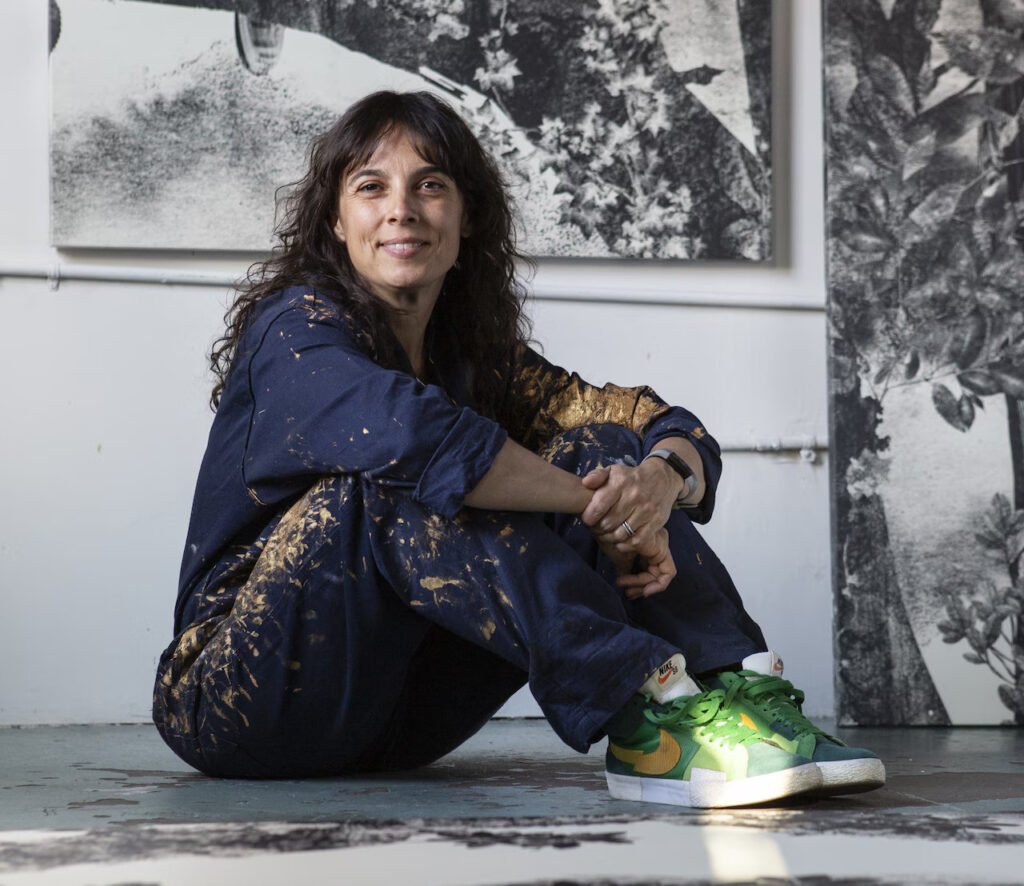
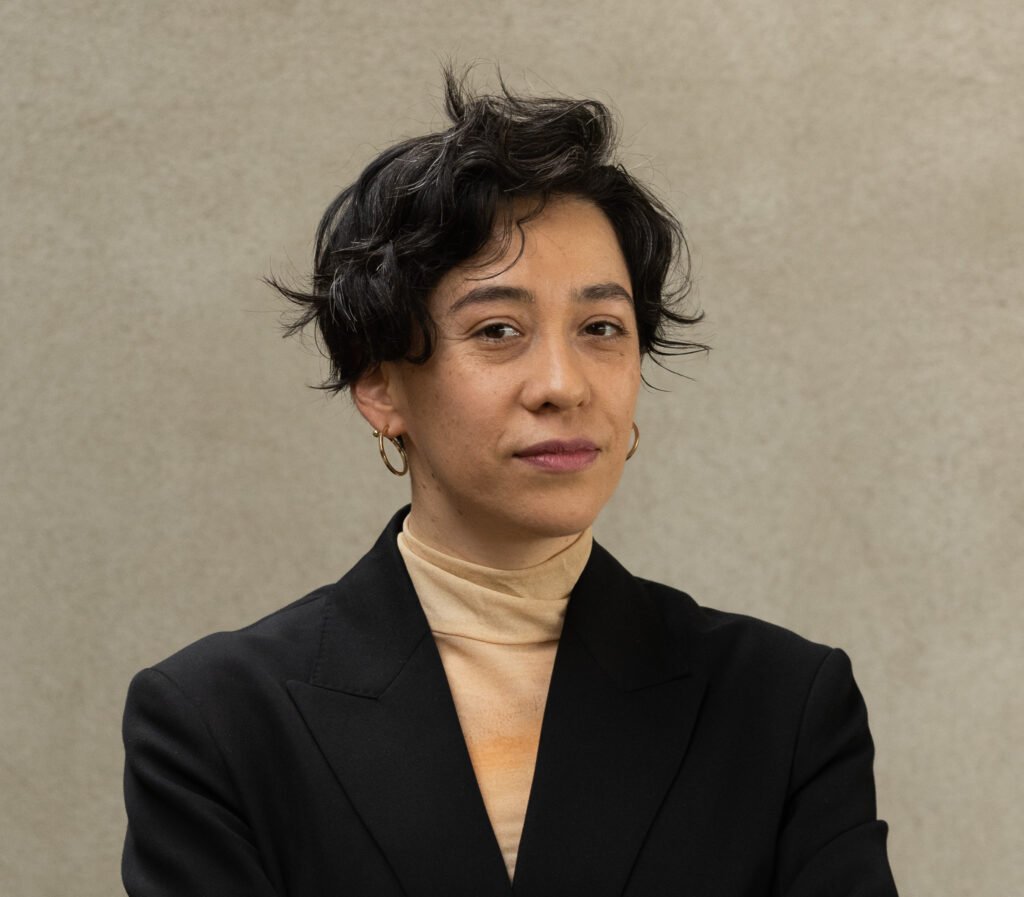
Tatiana Arocha is a Colombian artist born in New York in 1974, whose practice explores the intimacy between people and the land, personal memory, and her own experience as an immigrant.

Read more

Para la Coca

Para la coca

Based on Jibina Marena Uay – Coca de la Buena Palabra, an ongoing script written by Cristobal Gomez Abel (Murui/Bora) and Laura Huertas Millan.

Artist’s country of origen: Colombia – Francia
Materials:
2-channel installation
Medium: video, installation
Size: 14 min
Year: 2024

Line of Inquiry:

Coca-Plant Coca-Worlds

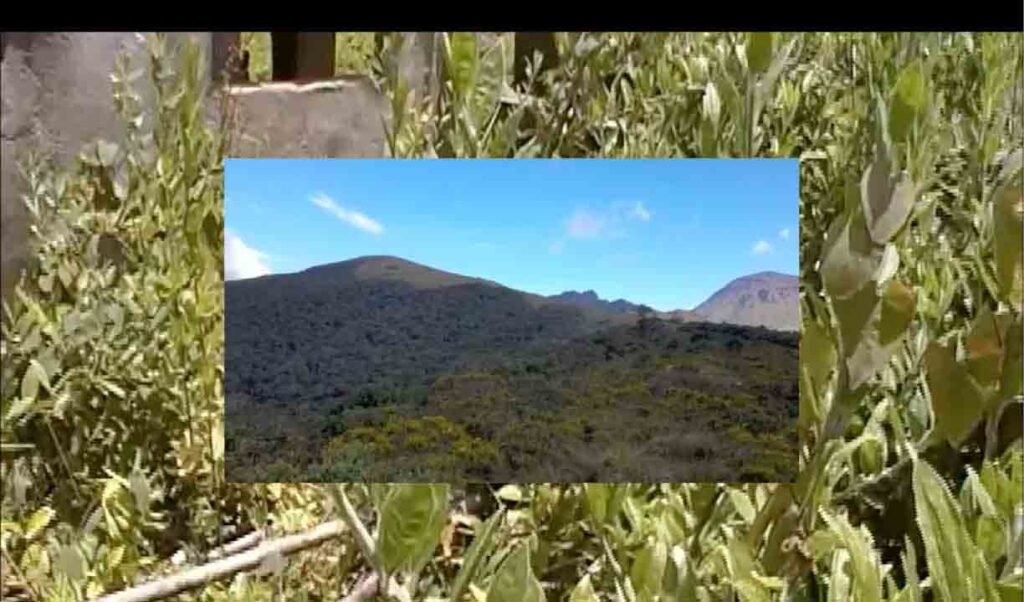
Para la Coca is a film and audiovisual installation centered on the coca plant (Erythroxylum coca), co-authored with Cristóbal Gómez Abel, a member of the Bora and Murui Colombian First Nations, the work emerges from a dialogue sustained over more than ten years. Initiated by Gómez Abel, Para la Coca revisits a Murui myth of origin that functions as an ancestral law, offering ethical guidance on the proper use of the coca plant.

In this myth, coca is not an object or a resource, but a person and a deity, embodied in the figure of a young girl who teaches her father and community how to relate to the plant with responsibility, care, and reciprocity. The work challenges dominant colonial and Western frameworks that reduce coca to its extraction into cocaine, and instead affirms its cultural, spiritual, and medicinal significance within Indigenous worlds. Para la Coca advocates for the decriminalization of the plant by restoring its place within living systems of knowledge and practice.

The project was developed with the guidance of Nelly Kuiru, founder and director of the Escuela de Comunicación Indígena Amazonía Ka+ Jana Uai (La voz de nuestra imagen). Her role was central to the production and writing of the film. The work is shared with the permission of Gómez Abel and his community, acknowledging the responsibility involved in circulating the teachings of coca through the form of myth.

Creditos: Based on Jibina Marena Uay – Coca de la Buena Palabra, an ongoing script written by Cristobal Gomez Abel (Murui/Bora) and Laura Huertas Millan.

We acknowledge that the ancestral myth of origin of the coca plant belongs to the Murui nation. We thank them for allowing our interpretation with the purpose of de-stigmatizing the coca plant and psychotropics, as well as honoring and amplifying ancestral indigenous political, cultural and spiritual resistance in Colombia.

With
Cristobal Gomez Abel, Pedro Armando Sopin Morales, Harold Jeferson Gomez Florez, Gilber Olmedo Morales, Dewins Nicolas Gomez Florez, Didier Libardo Santana Gaspar, Carmen Sofia Gaspar Florez, Libardo Santana Florez, Diana Valentina Cuellar Gomez, Cristian Gomez Florez, Alina Santana Gaspar.

Recorded in
the Muiri Muina community,
Nimaira Náimeke ibike, Patio de Ciencia Dulce

Directed and produced by
Laura Huertas Millán

Creative and production consultant
Nelly Kuiru

DoP
Mauricio Reyes, Laura Huertas Millan

Sound recording
Laura Huertas Millan, Grégory Castéra, Angel Maria Fajardo

With the support of
PinchukArtCenter, Liverpool Biennial, CNAP (Centre National des arts plastiques), Institut Français (Résidence+), Mondes Nouveaux (Ministère de la culture).

More info visit: https://www.laurahuertasmillan.com/shows

The Artist

Laura Huertas Millán

Laura Huertas Millán (b. 1983, Colombia) is an artist and filmmaker. She holds a PhD from Université PSL (SACRe-Programm) in Paris and conducted research at Harvard’s Sensory Ethnography Lab as part of her studies.

Read more

More From This Artist

Macabre Dance

Macabre Dance

Alejandra Delgado Uría

Artist’s country of origen: Bolivia
Materials:
Video Sound: Danse macabre by Camille Saint-Saëns, Op. 40
Medium: Installation, Video, Performance
Size: 00:02:31 sec.
Year: 2013 / 2022 / 2024

Line of Inquiry:

Coca-Politics

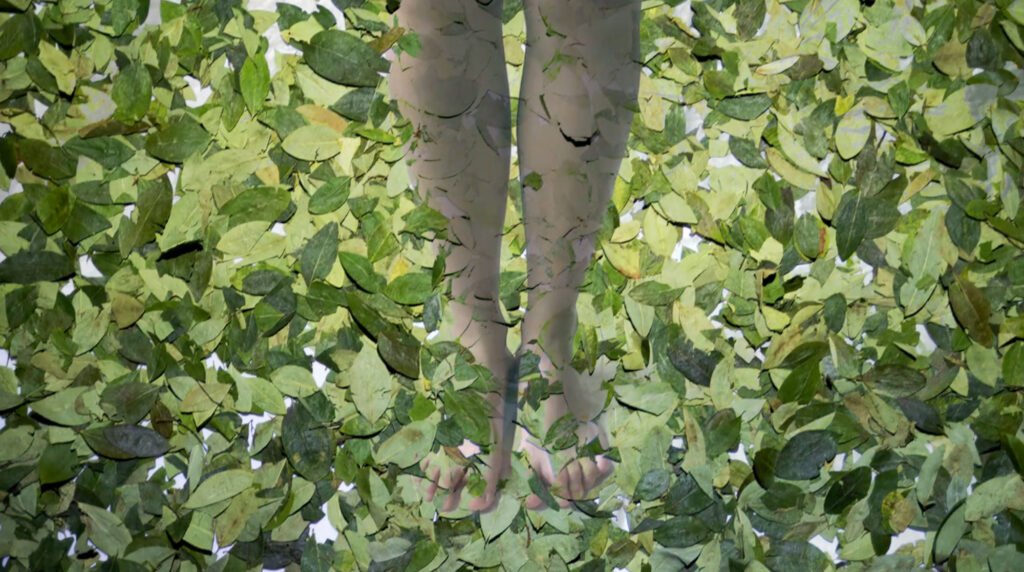
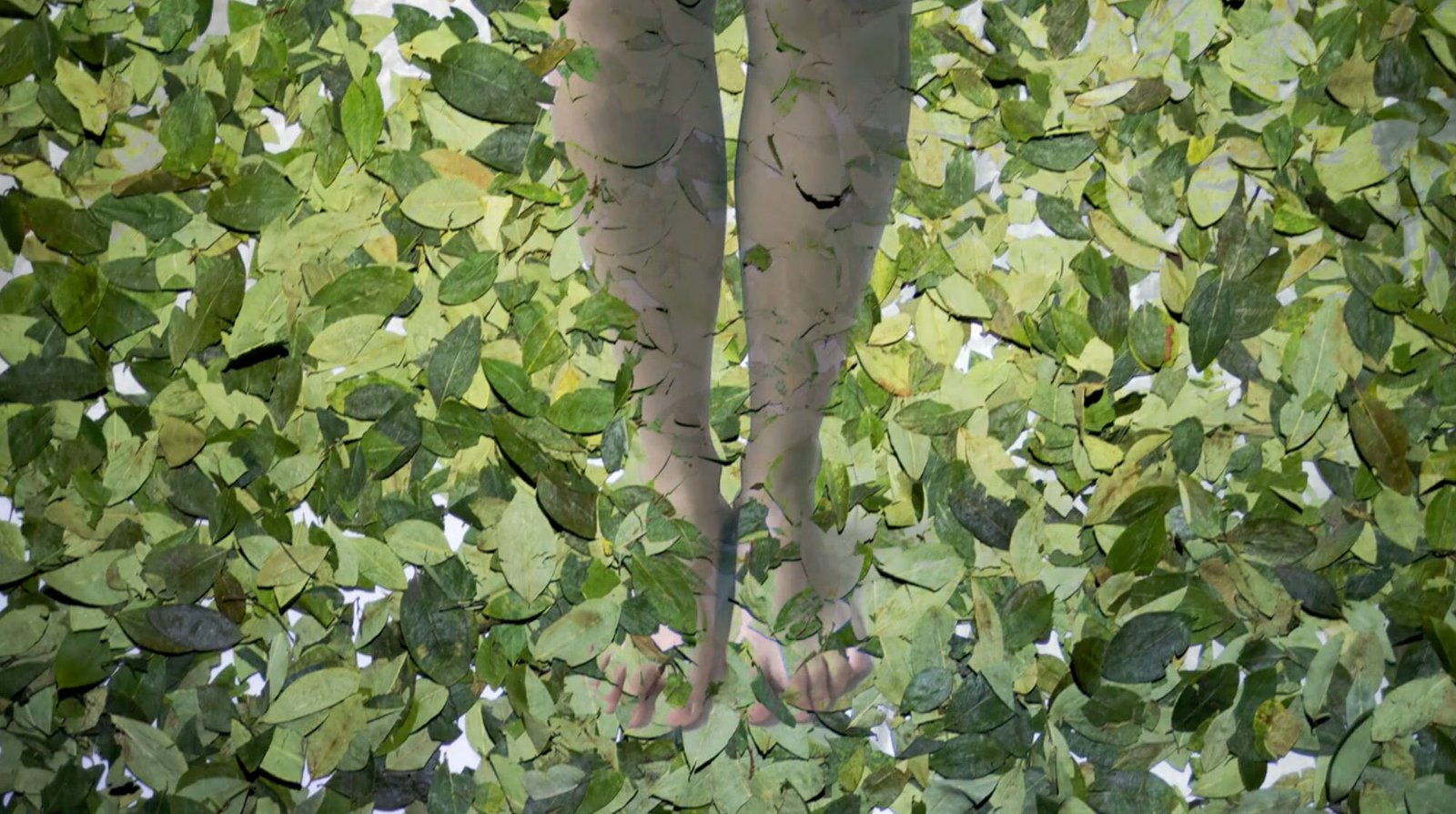
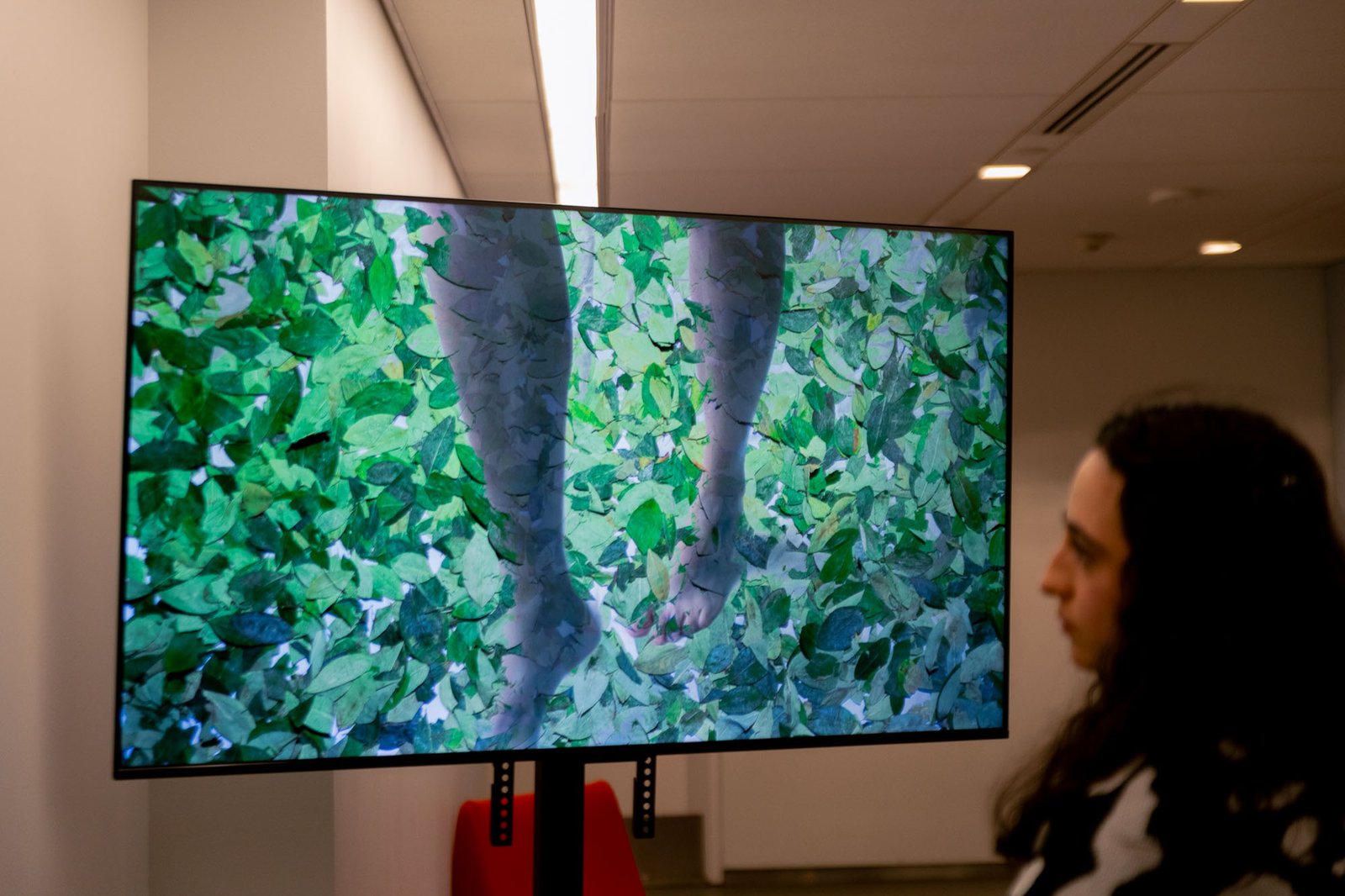
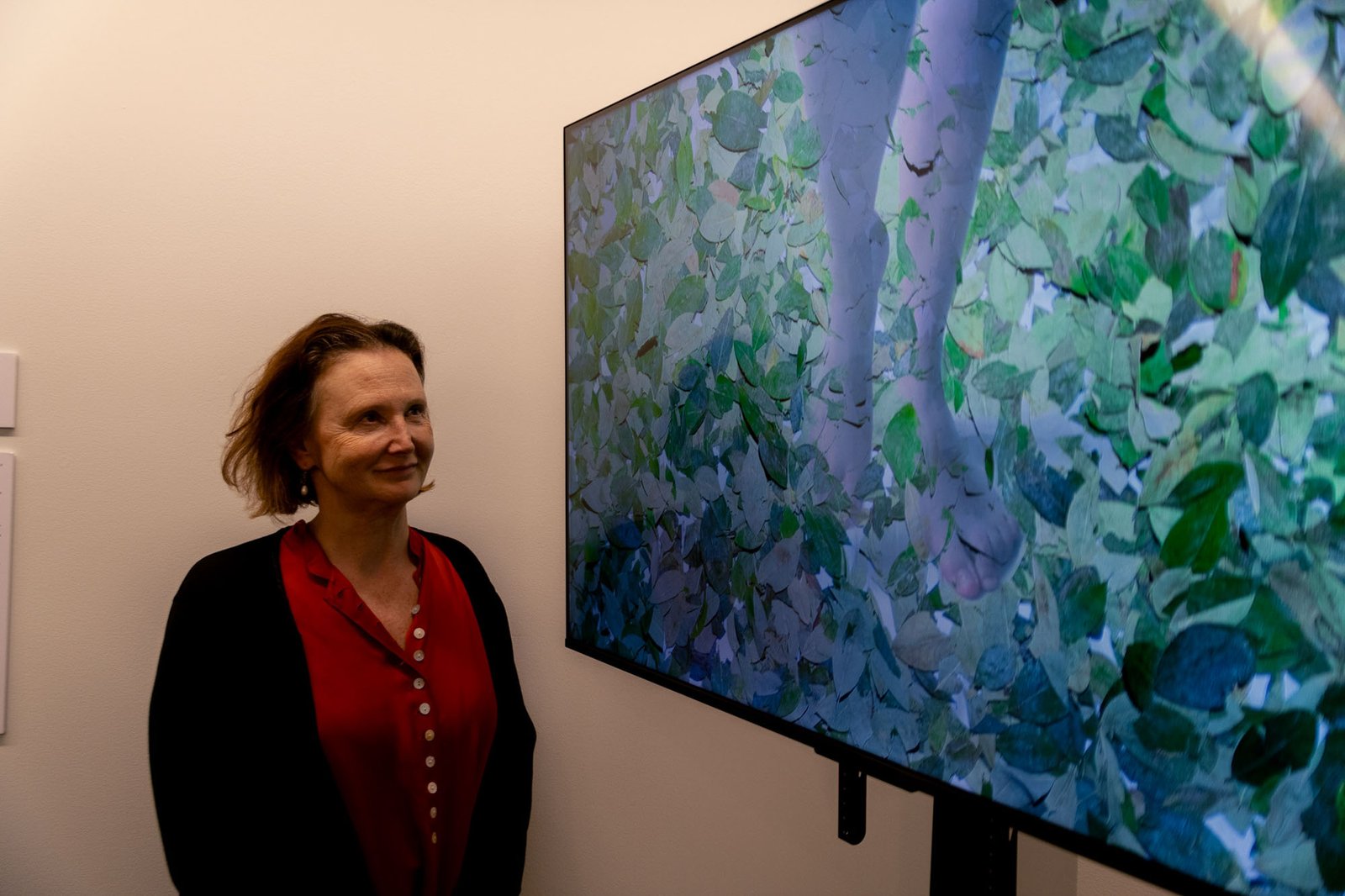
In her piece Macabre Dance, Delgado intertwines performance, sound, and installation to explore the complex historical realities of Bolivia surrounding the coca leaf. She creates a tapestry made of coca leaves, onto which she projects a video showing a woman’s feet dancing to Danse Macabre by Camille Saint-Saëns, inspired by the play Danza macàbra by Camillo Antona Traversi, a satirical Italian work from the late 19th century. 

The femele feet projected onto the tapestry reference the traditional process of stomping coca leaves to produce coca base paste, while also symbolizing the role of Bolivian Indigenous women in the fight against the prohibition of the coca leaf and their their vulnerability to the abuses of drug trafficking, prostitution, and human trafficking embedded in the illicit economy. Delgado uses this duality to highlight the contradictions surrounding coca: a plant both sacred and commodified.

This work reflects the fundamental role of women in defending their traditions, as well as their resistance to the violence and exploitation stemming from the global drug problem, highlighting their role in care networks and in the struggle for dignity and justice.


The Artist

Alejandra Delgado Uría

Alejandra Delgado Uría is a Bolivian visual-artist and photographer whose work explores architecture, memory, and identity in the Andean region.

Read more

More From This Artist

Synaptic Emancipation

Synaptic Emancipation

NOMASMETAFORAS

Artist’s country of origen: Colombia – Francia
Materials: Video, sound recording, audiovisual archive.
Size: 13’10 Mins
Year: 2023

Line of Inquiry:

Coca-Worlds

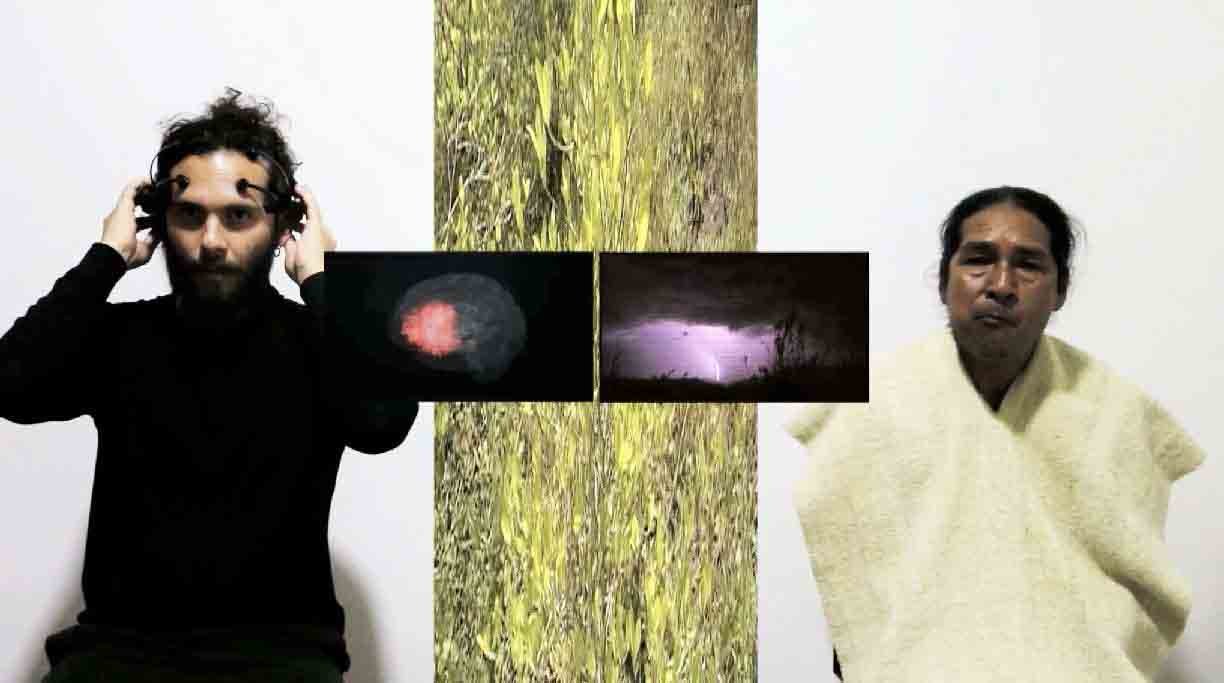
Synaptic Emancipation contrasts the narratives embedded in Western technological objects—designed to access the mysteries of the brain—with the ways in which Indigenous communities activate their own technologies by chewing coca leaves to awaken consciousness. Receiving the visions of coca through dreams opens a space of telepathic communication that does not entail the destruction of any ecosystem, unlike the production of so-called “high technology” in the West.The video features Luis Aureliano Yunda, a The’ Wala (traditional healer) from the Nasa community, who has been a close friend of the artists for over fourteen years. Their friendship has been intertwined with traditional medicine and with ceremonial, philosophical, artistic, and ritual experiences that foster collaborations between visual arts and ancestral knowledge.

The Artist

NOMASMETAFORAS

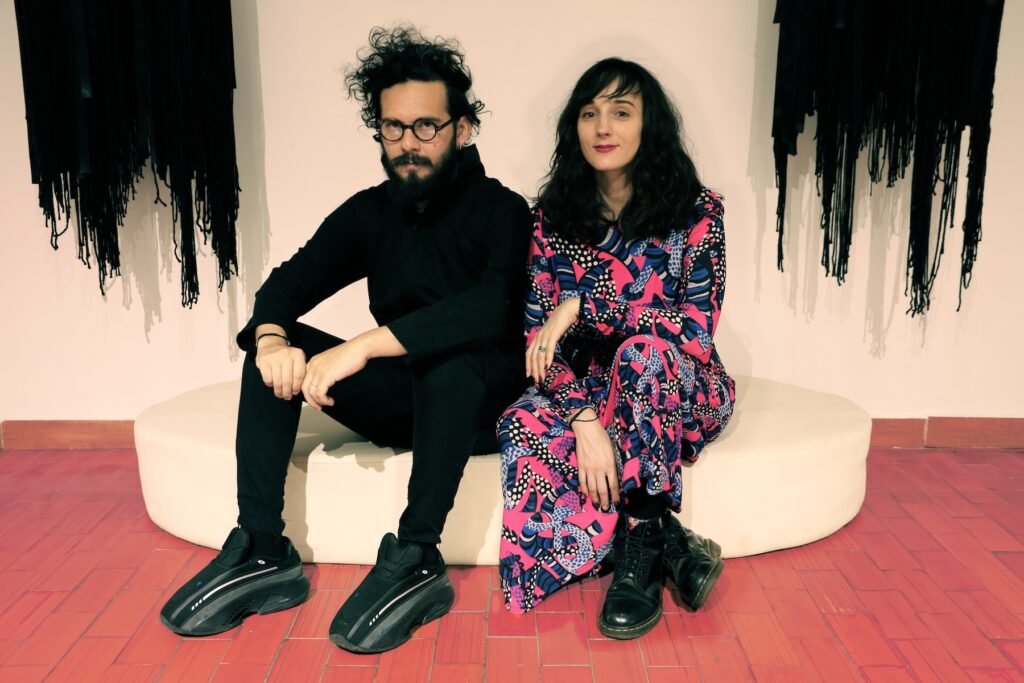
NOMASMETÁFORAS is a contemporary art and research collective founded by Clara Melniczuk and Julián Dupont, whose work unfolds between Colombia and France at the intersection of art, philosophy, and Indigenous epistemologies.

Read more

More From This Artist