Painting as a Way of Mambear the World
Written by
Angélica Cuevas
Photos:
Óscar Pérez for Forging Journal | Forge Project (NYC)
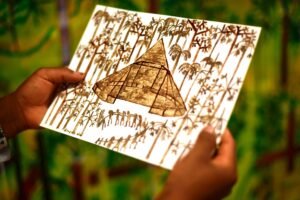
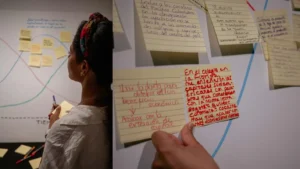
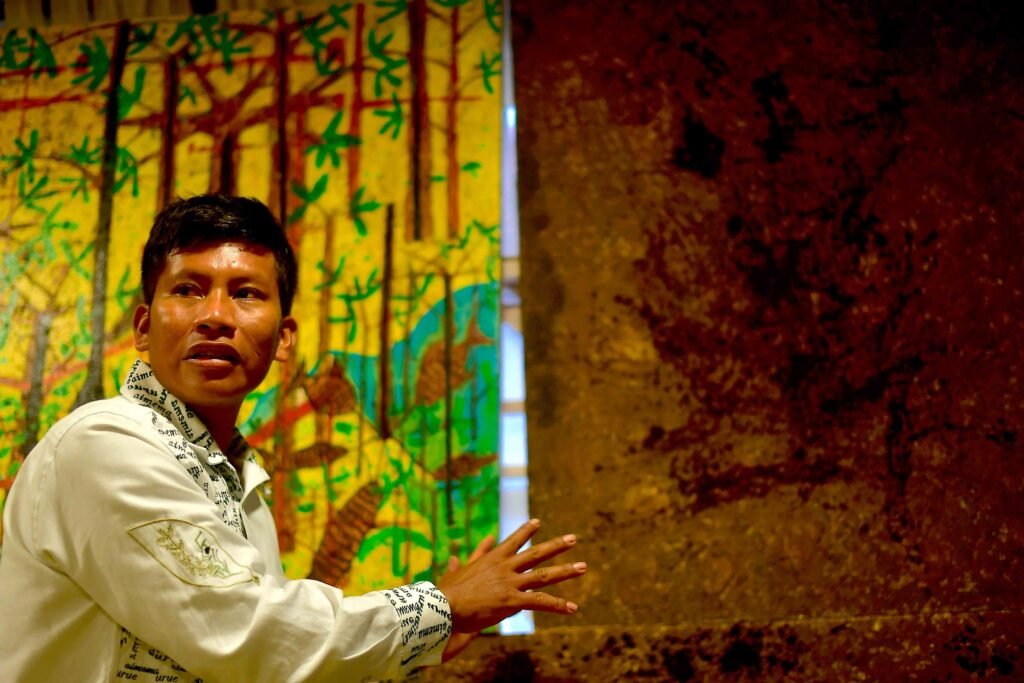
The article “I Speak for the Forest, for the Rivers, for the Ancestors Who Keep Conversing Through the Mambe”explores the work of Murui-Muina artist and mambeólogo Aimema Úai, for whom painting is not an aesthetic representation but a living practice of thinking with the forest.
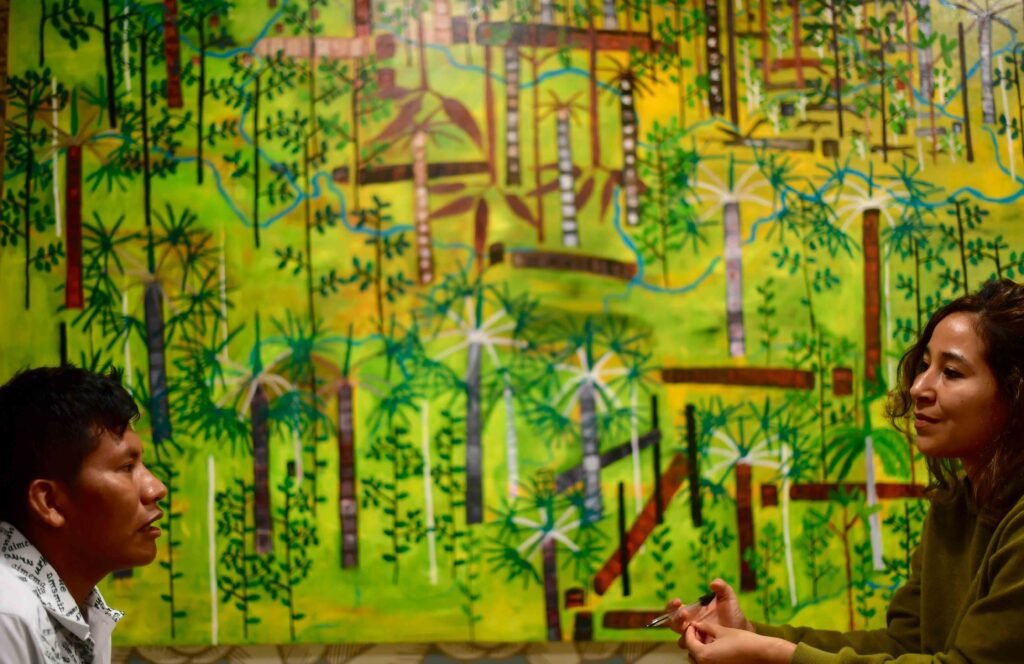
This text was the first article I wrote after being selected as part of the 2025–2026 cohort of Journal Forging, the writing and editorial fellowship of Forge Project in New York (USA). Journal Forging accompanies writers, curators, and thinkers in the development of critical and experimental texts in dialogue with contemporary artistic practices, with a strong emphasis on Indigenous, decolonial, and situated perspectives. The program understands writing as a relational practice: an exercise in listening, research, and sustained conversation with artists, territories, and living memories, rather than a distant or extractive form of analysis.
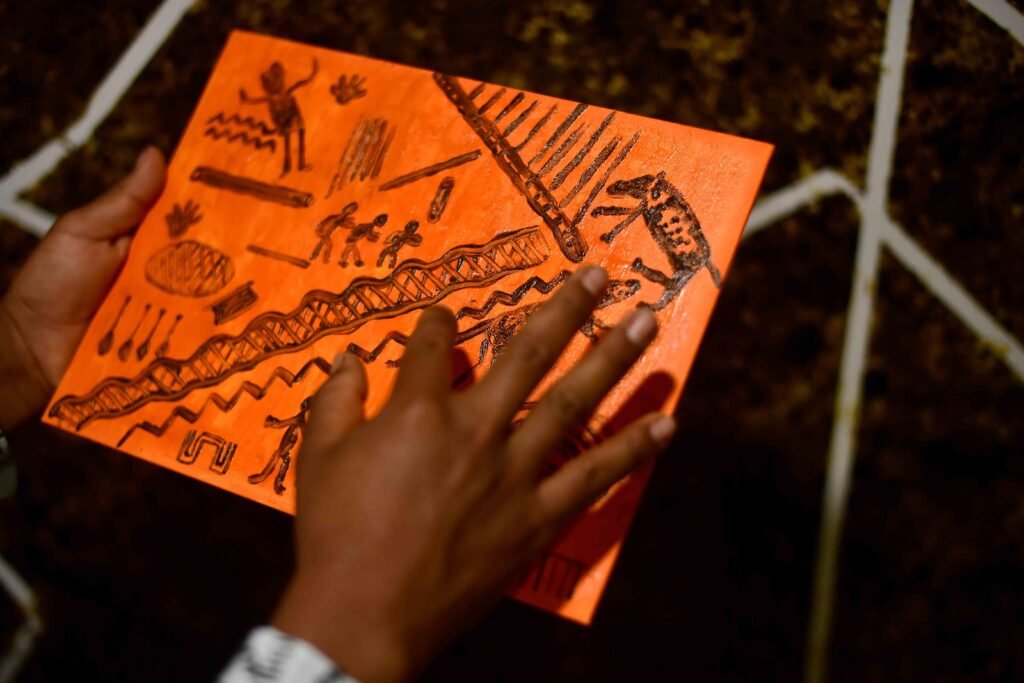
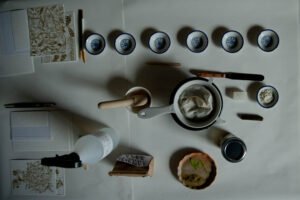
The article emerges from an in-depth interview I conducted with Aimema Úai in October 2025, at his home-studio in Bogotá, just days before his trip to Belém do Pará to participate in the Amazon Biennial and in parallel spaces to COP30. From that conversation, the text explores how his pictorial practice—activated by mambe, by the spoken word, and by pigments drawn from the territory such as wito and dragon’s blood resin—functions as an extension of the maloka, the ceremonial house, school, and spiritual center of the Murui-Muina people.
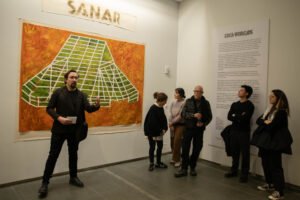
Aimema’s paintings operate as living cartographies of Murui-Muina continuity, where the maloka does not appear as a ruin or a metaphor, but as an active structure from which balance between body, territory, and spirit is continually rebuilt, even after the devastation caused by the rubber boom and the extractive violences that have deeply marked the Amazon. In his work, painting becomes a way of mambear: a space where the word is activated, where the world is cared for, and where different times and territories are allowed to speak to one another.
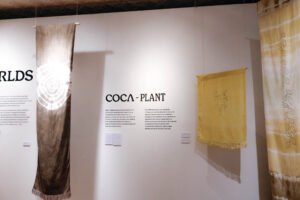
From COCAWORLDS, this text speaks directly to our lines of inquiry Coca–The Plant and Coca–Word, World, affirming coca as a relational being, a living medicine, and a technology of knowledge—challenging regimes of stigmatization that have reduced the plant to a commodity or a problem of control. Aimema’s work reminds us that art can also be a practice of reexistence: a way of keeping the house standing, of keeping the word moist and alive, and of continuing to listen to the forest even where we are no longer physically present.

MORE EXHIBITIONS
“Los Confundidos” (The Confused): a documentary about coca at the UN
For over 60 years, decisions about the...
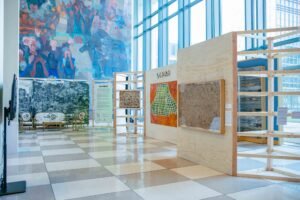
COCAWORLDS at the UN
COCAWORLDS was a curatorial project by Liana...