Mama Coca and the Futures We Have Yet to Imagine
Written by
Giselly Mejía
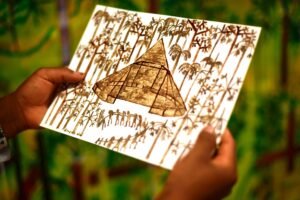
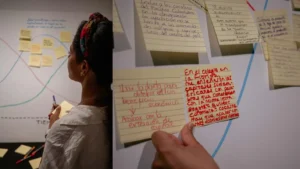
What would happen if we thought about the future of the coca leaf beyond prohibition, stigma, and inherited narratives?
Mama Coca Chronicles: Navigating Ancestral Heritage and Future Narratives, an academic article published in the Journal for Future Studies (Researched and written by me), begins with this question to explore how coca can open pathways toward more just, reparative, and decolonial Latin American futures.
The paper is structured as a journey across academic research, participatory practice, and speculative thinking. Rather than limiting itself to analyzing the plant’s past or present, it proposes something different: the use of futures methodologies to imagine possible, probable, and desirable scenarios, integrating ancestral knowledge, migrant voices, art, politics, and futures design.
How did I research and what did I find?
The research combines traditional qualitative methods with futuring ones.
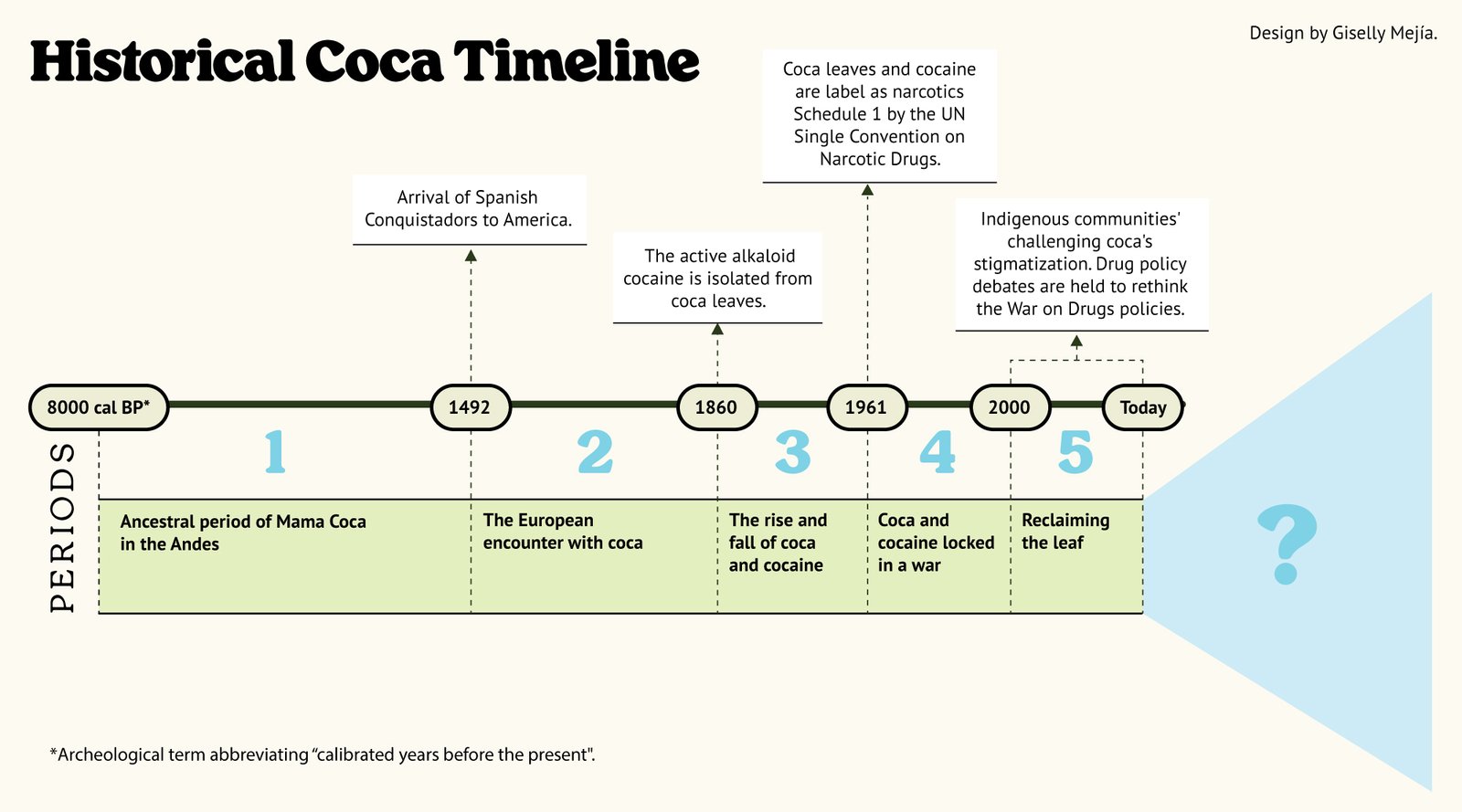
Desk Research: I conducted extensive literature reviews to understand how coca moved from being a sacred plant before the colonization of Abya Yala (the American continent) to a source of war, injustice, and political turmoil. At some point in my research, I wanted to map out that journey and created a timeline for the visual readers (see below).
Signal scanning: I started scanning signals of change and categorizing them into Social, Technological, Economic, Environmental, and Political (STEEP model), which uncovered that the majority of the changes proposed today around coca are Economic related (use of coca as an ingredient for recipes, and natural products, prices of coca production lowering and crops increasing, etc) while the Technological ones are very few (Medical research on coca’s in cardiovascular and pulmonary conditions, as well as attention-deficit disorders)
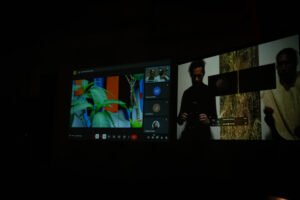
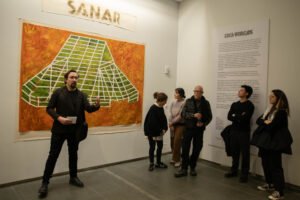
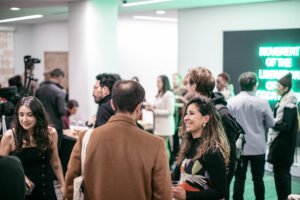
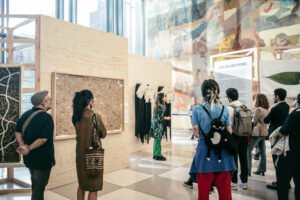
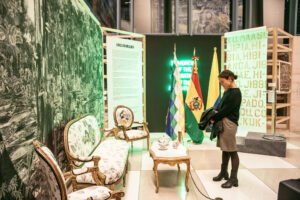
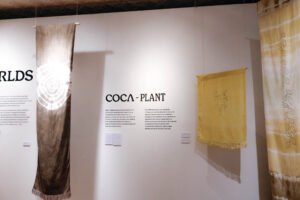
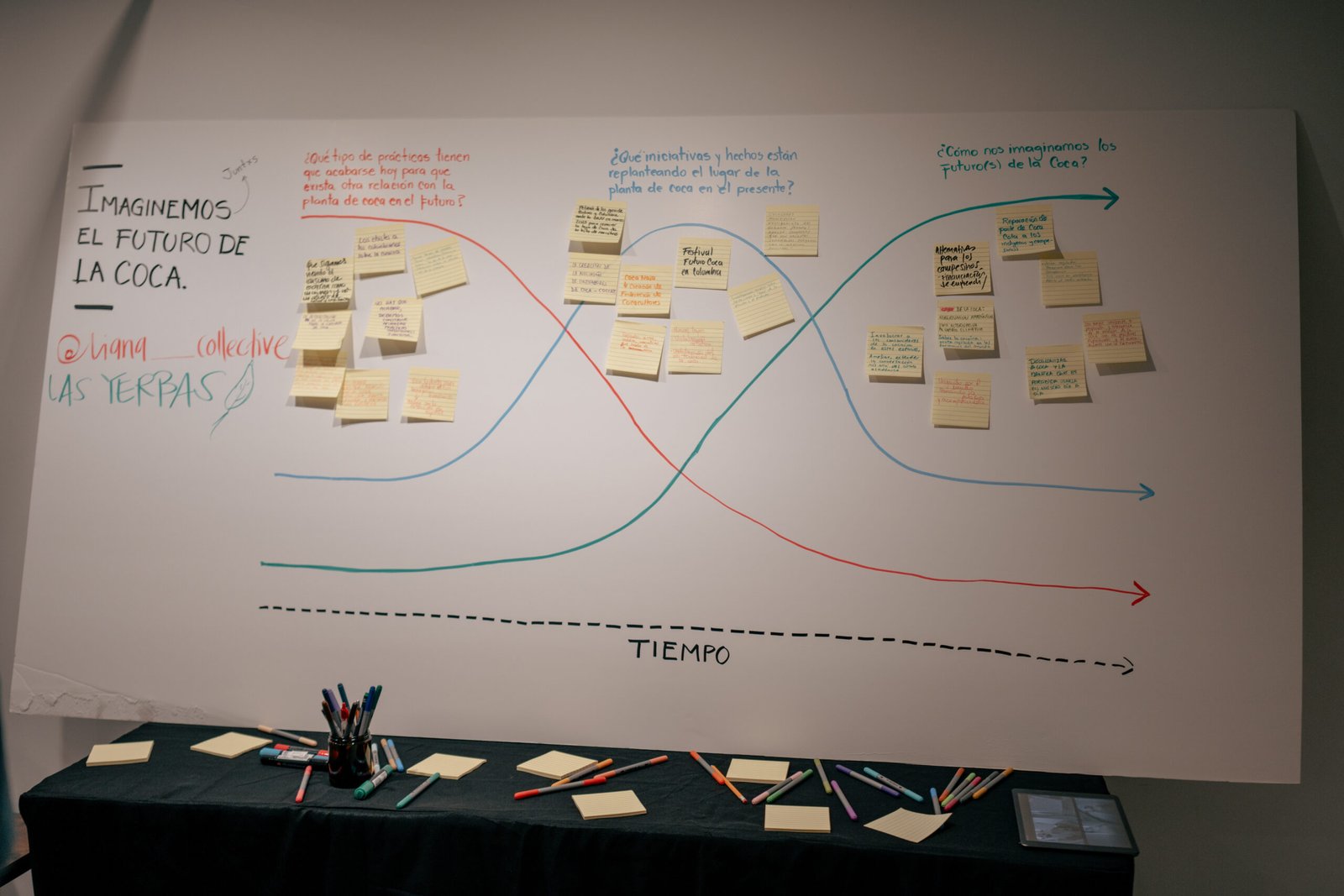
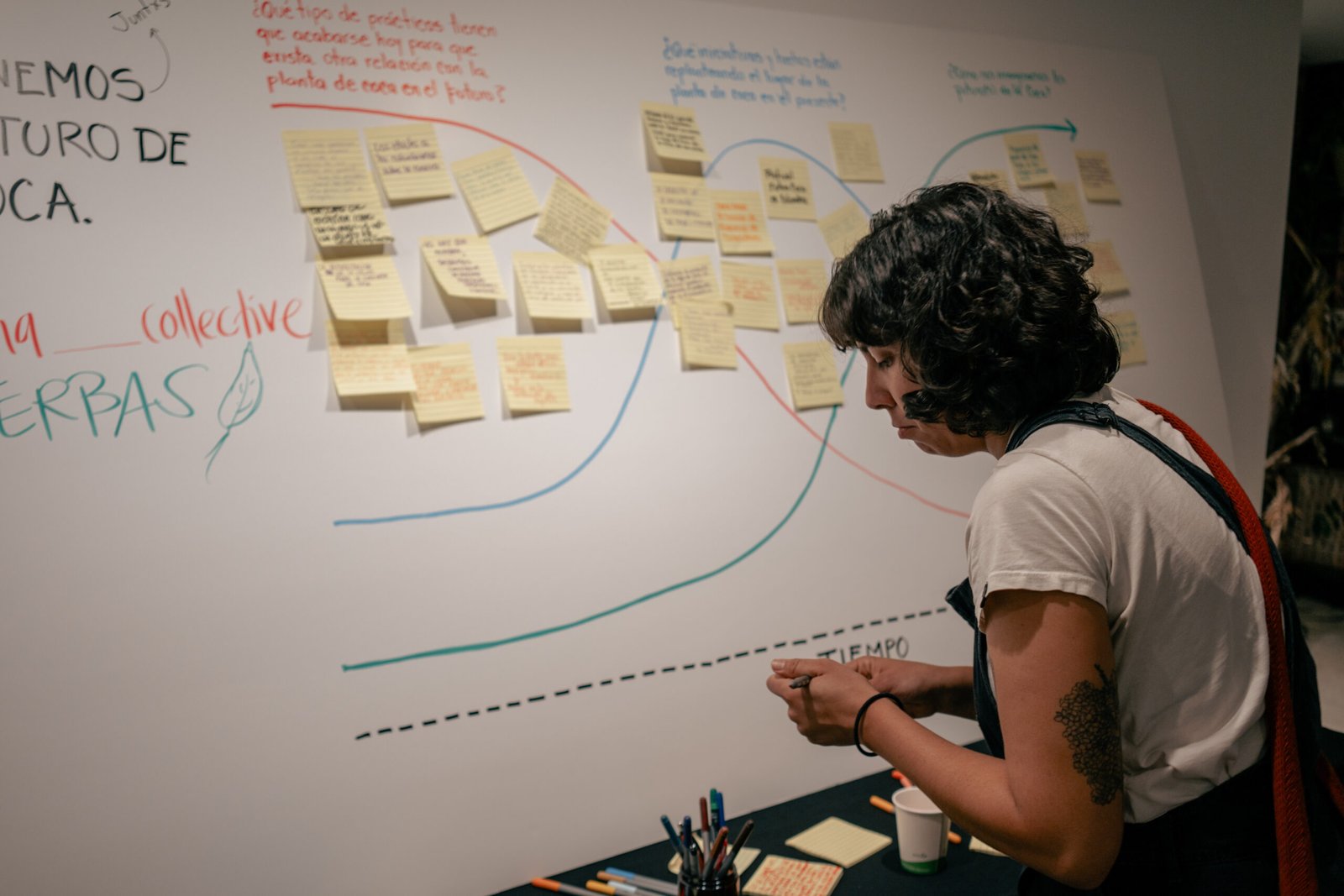
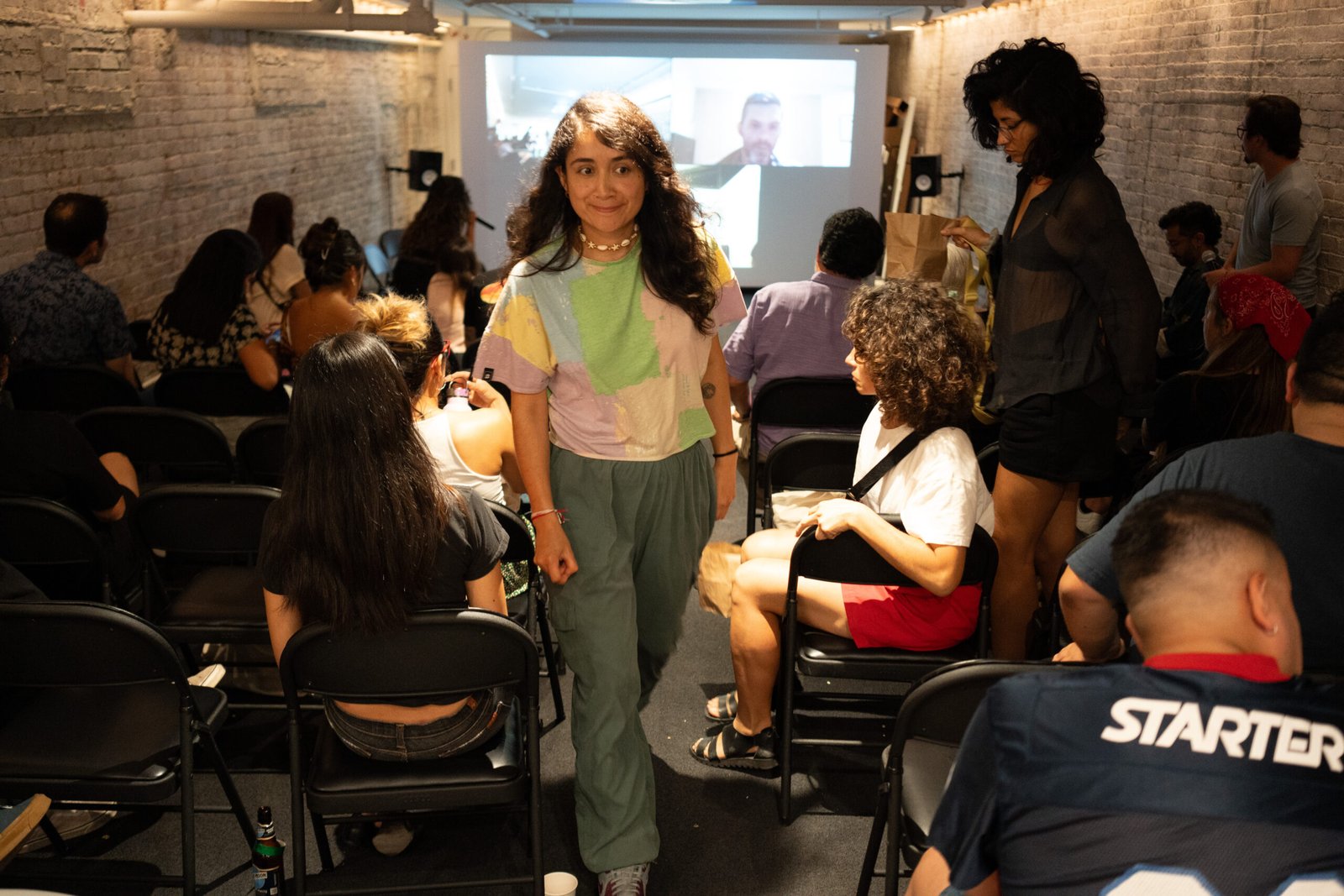
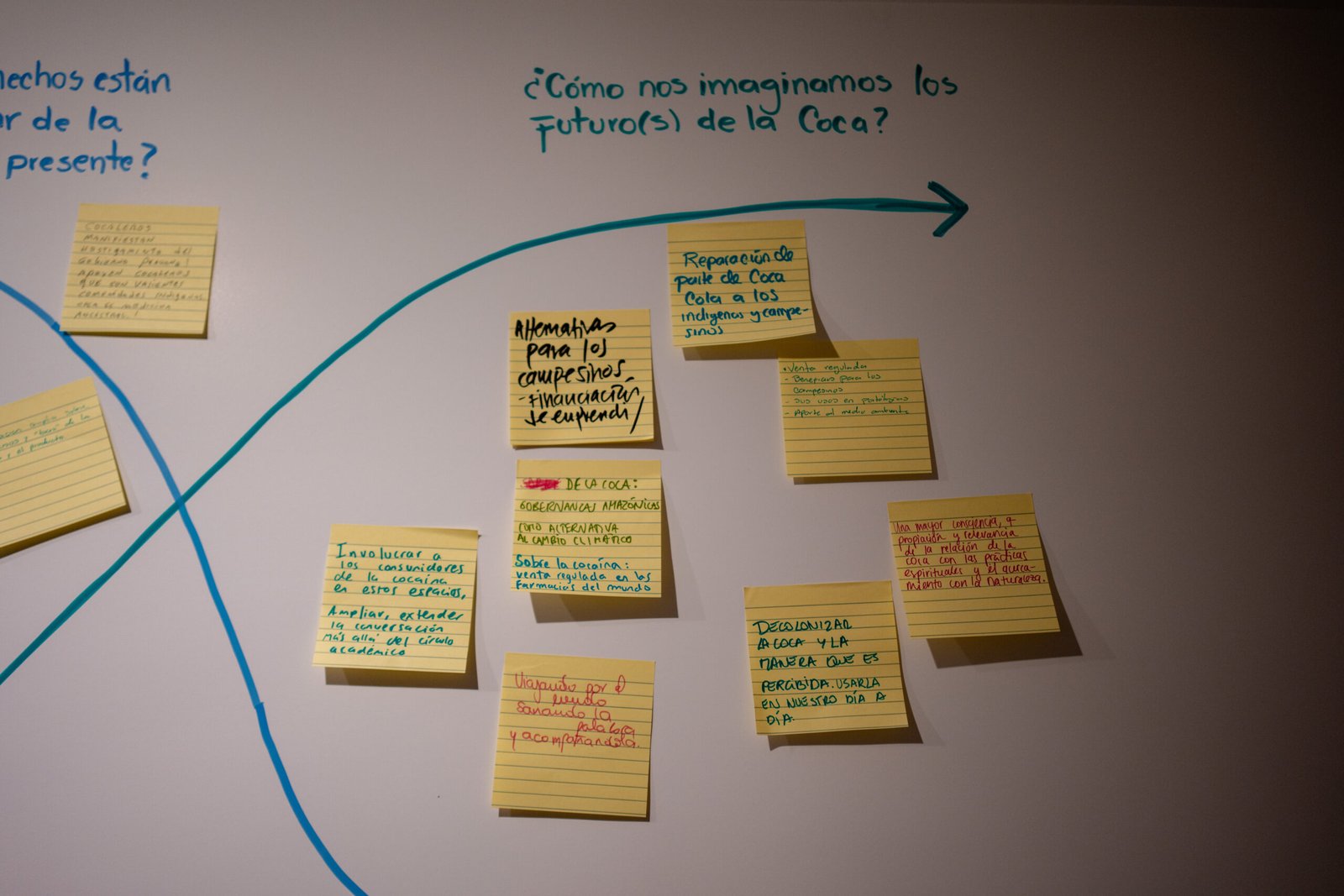
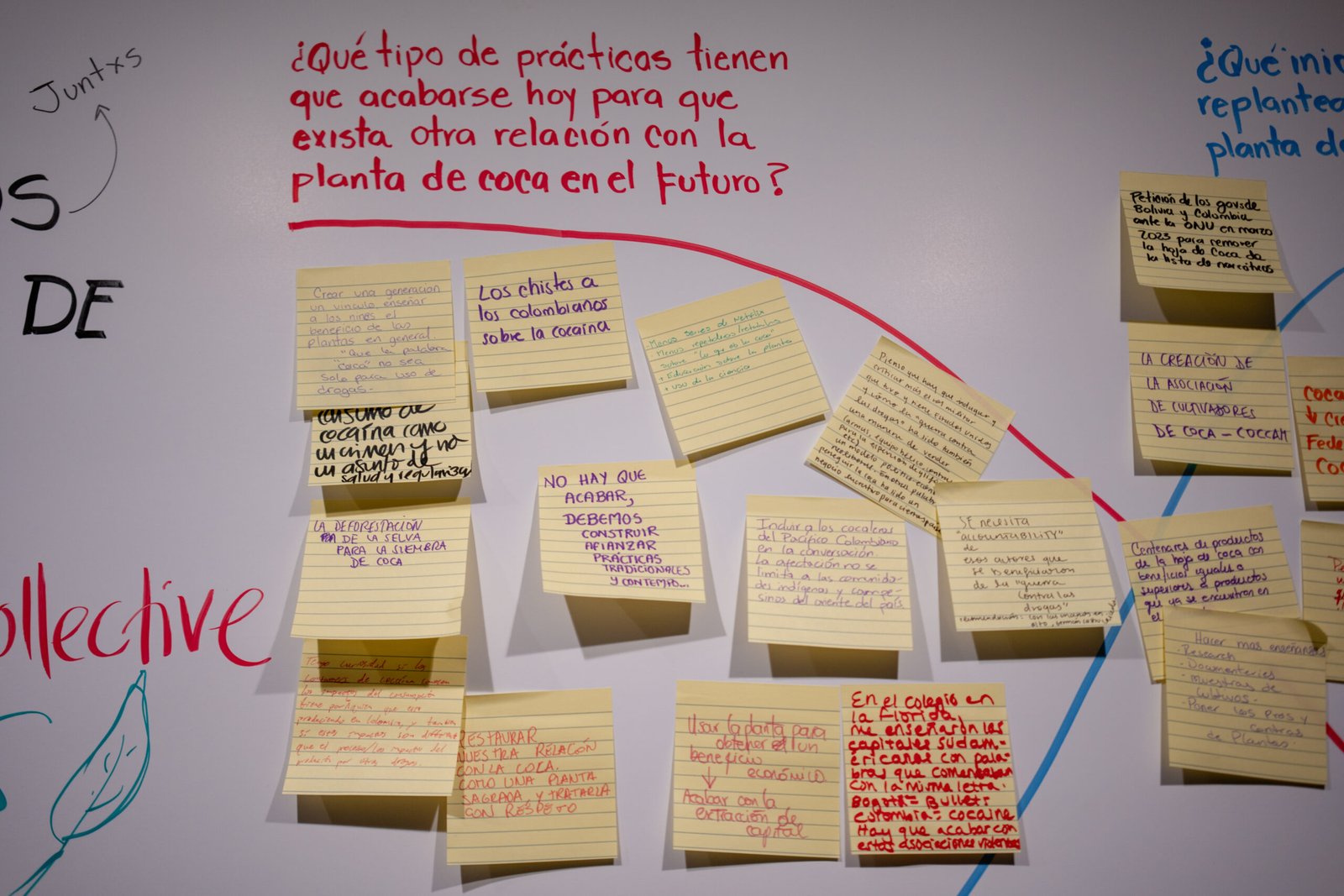
Workshops: I also had the fortune to facilitate participatory workshops with Andean and Amazonian artists, researchers, and traditional users of the coca leaf, using COCAWORLDS exhibitions in New York as a holding space for these. These participants (often absent from public policy debates) articulated a future for coca that centers education, reparations, and scientific research, framing the plant not merely as a botanical entity but as a living symbol of unfinished education, unresolved colonial harm, Indigenous governance, and alternative relationships to land and knowledge.
Three scenarios to think through (and decide)
The paper concludes with three speculative scenarios for the future of coca that serve as a narrative tool to provoke reflection, debate, and ethical positioning (Spoiler alert: some could make you feel uncomfortable, but that is the intention).
- The Coca Alkaloids’ Medical Journey (A counterfactual scenario): Here I go back to 1884 and send Freud to do research on the coca plant with Indigenous peoples in South America instead of experimenting on himself with the recently isolated cocaine alkaloid (which he actually did). I play with the idea that coca could have developed as a medicine since the nineteenth century through an early integration of Western science and Indigenous knowledge.
- How Cocaine-Infused Products Captivated the World (A probable future): This scenario brings together things we have already seen happen with other previously illegal plants (i.e Coffee and Cannabis) that suddenly get legalized and absorbed by corporate and colonial logics, turning coca products into those that serve consumerism and continue making the rich richer.
- A Story of Healing and Reconciliation (A preferable future): Preferable for whom? For those who participated in the COCAWORLDS exhibitions and my workshops, and for others dreaming of a future where legalization and regulation go hand in hand with Indigenous governance, public education, reparations, and healing—for people, territories, and the plant.
An open invitation
What futures are we helping to cultivate today?
Mama Coca Chronicles is not only a paper about coca. It is an invitation to reflect on how we imagine the future, who participates in that imagination, and which stories we choose to amplify.
I invite you to read the full article.
Gracias for reading!

MORE EXHIBITIONS
“Los Confundidos” (The Confused): a documentary about coca at the UN
For over 60 years, decisions about the...
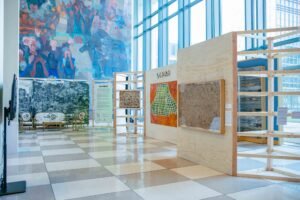
COCAWORLDS at the UN
COCAWORLDS was a curatorial project by Liana...