Miguel Ángel Rojas
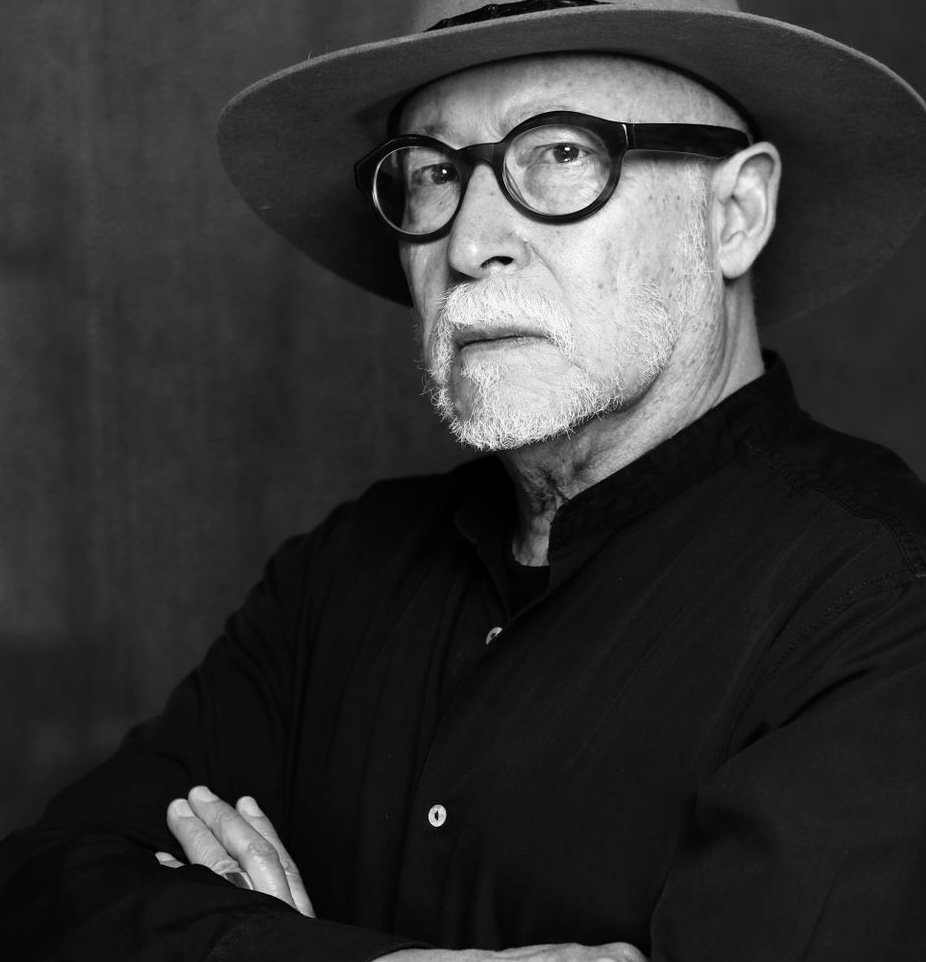
Bogotá, Colombia. 1946
Based: Bogotá, Colombia
Miguel Ángel Rojas is a pioneering Colombian conceptual artist whose work exposes hidden systems of power, marginality, and identity through an examination of his country’s social and political landscape.
Born in Bogotá, Colombia, in 1946, Rojas grew up between the capital and the town of Girardot. He initially pursued architecture at the Pontificia Universidad Javeriana beginning in 1964, but after six semesters redirected his passion toward art. He enrolled at the National University of Colombia’s School of Fine Arts, graduating in 1969. During this period, he began experimenting with long-exposure photography and self-portraiture, techniques that would become foundational to his early explorations of perception, identity, and social invisibility.
Rojas’s multidisciplinary practice encompasses photography, drawing, engraving, video, installation, and mixed media. His work critically reflects on urban life, sexuality, violence, colonial legacies, and social inequality in Colombia. He emerged as one of the country’s most significant conceptual voices in the 1970s with the groundbreaking Faenza series: clandestine photographs documenting intimate encounters among gay men in Bogotá’s B-movie theaters. These haunting, fragmented images initiated Rojas’s enduring investigation into the intersection of intimacy, censorship, and the politics of visibility. Throughout his career, he has remained committed to examining the porous boundaries between public and private spheres, beauty and conflict, materiality and meaning.
Since the mid-1990s, the coca leaf has become central to Rojas’s artistic vocabulary. He initially employed it to evoke the ancestral and sacred dimensions of indigenous cultures, later transforming it into a potent political metaphor for Colombia’s fraught relationship with global markets, consumption, and violence. By assembling coca leaves into pop-inspired compositions, Rojas reimagines national symbols and consumer icons, exposing how economies of desire and addiction intertwine. For him, coca embodies both cultural continuity and social contradiction—a living material that inscribes Colombia’s wounds and resilience.
Throughout his career, Miguel Ángel Rojas has received wide international recognition, beginning with his participation in the II International Biennial of San Juan in 1979 and early awards such as the León Dobrzinsky Prize (1981) and the First Prize in Photography at the XXXII National Salon of Colombian Artists (1989). His work has been featured in major solo exhibitions, including Bio at the Museo de Arte Moderno de Bogotá (1991), La Cama de Piedra at the Museo Nacional de Colombia (2002), At the Edge of Scarcity at Sicardi Gallery in Houston (2011), El Nuevo Dorado at ARCO Madrid (2012), and Regreso a la Maloca at MAMBO (2021). Most recently, he participated in the 60th Venice Biennale in 2024, reaffirming his position as one of the most significant voices in Latin American conceptual art.